

Fix Your Skin Barrier in 7 Days With a Winter Skincare Routine
The most effective winter skincare routine change is barrier protection: swap your foaming cleanser for a cream formula, upgrade to a richer moisturizer built on humectants, emollients, and an occlusive layer, and keep sunscreen on every single day. Add a bedroom humidifier and you have covered the changes that actually matter. Everything else, including which serum you use, is a lesser detail once those three swaps are locked in.
TL;DR:
- Switching from foaming to cream cleansers reduces skin stripping and may involve cleansing once daily if flakes are visible.
- The most effective winter moisturizer combines humectants, emollients, and occlusives in a thick cream to prevent water loss in dry, cold air.
- Sunscreen remains crucial year-round, especially at high altitudes or near reflective surfaces like snow, to protect against UVA rays.
- Reducing exfoliation to once or twice a week and using gentler retinoid products helps prevent barrier thinning and irritation caused by dry winter air.
- Layer skincare products properly by applying treatments on damp skin and sealing with an occlusive at night to maximize hydration retention.
Table of Contents
- Your Winter Skincare Routine Starts With These Three Swaps
- Should You Change Your Actives and Exfoliation for Winter?
- How to Layer Winter Skincare Products So They Actually Work
- Don’t Forget Hands, Lips, and Body
- The Habits That Matter as Much as Your Products
- A 7-Day Plan to Reset Your Winter Skincare Routine
- A Ready-Made Winter Routine From Splendoraskincare
- What I’d Actually Tell a Friend About Winter Skincare
- Try Splendoraskincare’s Winter Starter Bundle
- Where This Guidance Comes From
- Sources
- FAQ
Your Winter Skincare Routine Starts With These Three Swaps
Cold air holds less moisture, and indoor heating strips even more of it out of the room you sleep in. That combination speeds up transepidermal water loss, the process by which water escapes through your skin faster than it can be replaced, and it’s the reason skin that felt fine in September suddenly feels tight and flaky by December. Dermatologists quoted in Vogue frame the fix as a seasonal wardrobe refresh, not a full routine teardown. You’re not throwing out your skincare closet. You’re swapping a few key pieces.
Cleanser. Foaming and gel cleansers rely on surfactants that strip oil efficiently, which is exactly wrong for winter — instead, try swapping to a cream formula like the Aloe & Botanical Shower Gel for gentler, moisturizing cleansing. Switch to a cream, milk, or balm cleanser, and if your skin is already flaking, consider cleansing once a day instead of twice.
Moisturizer. This is where most people get it wrong by just using more of the same lotion. Look at the ingredient label instead. Effective winter moisturizers combine three categories:
- Humectants like hyaluronic acid and glycerin, which pull water into the skin’s surface
- Emollients like squalane and shea butter, which smooth and soften the outer layers
- Occlusives like petrolatum, which physically block water from evaporating
Dartmouth Health describes this as attracting, filling, and sealing moisture, and all three jobs need to happen for a moisturizer to actually work in cold, dry conditions. A thick cream that holds its shape when scooped from a jar tends to deliver more of this than a thin, pump-dispensed lotion according to skin health guidance from Mass General Brigham.
Sunscreen. Cloud cover blocks a lot of visible light, but not UVA rays, which stay fairly constant across seasons. The Guardian notes sunscreen matters even more at altitude or near snow, since reflective surfaces bounce UV back at your face.
Should You Change Your Actives and Exfoliation for Winter?
Yes, and this is the swap most people skip until their skin is already irritated. Retinoids, benzoyl peroxide, and strong acid exfoliants all work by accelerating cell turnover or breaking down surface bonds, which thins the outermost barrier layer temporarily. In winter, that barrier is already under stress from the dry air, so the same product that felt fine in July can leave you red and stinging in January.
- Cut exfoliation frequency first. Once or twice a week is enough for most people during winter, according to Healthline’s dermatologist-sourced winter guidance, down from the two to three times you might tolerate in warmer months.
- Switch or dilute retinoids. A gentler acid like mandelic acid, or a lower-strength retinoid, causes less irritation. If you want to keep your current strength, mix a pea-sized amount directly into your moisturizer before applying, a buffering trick that slows absorption without cutting the ingredient out.
- Patch-test before committing. Apply any new or adjusted active to the inside of your forearm for two nights before putting it on your face.
- Pause immediately at the first sign of stinging, peeling, or persistent redness, and don’t resume until your skin has calmed for at least three days.
How to Layer Winter Skincare Products So They Actually Work
Order matters more in winter than any other season, because a misplaced occlusive can block the exact ingredients you’re trying to absorb. The sequence stays simple: cleanse, treat, moisturize, then seal.
- Cleanse with your cream or milk formula.
- Apply serum or treatment on damp skin. Humectants like hyaluronic acid pull in whatever moisture is already sitting on the surface, so applying to slightly wet skin measurably improves how much water they actually trap.
- Moisturize within about three minutes of cleansing or showering. Wait longer than that and you’re moisturizing skin that’s already started drying out again.
- Seal with an occlusive at night only, applied last, over everything else.
Pro Tip: If your skin still feels tight after your regular moisturizer, try a thin layer of plain petroleum jelly as the very last step at night, a technique sometimes called slugging. It has to go last, since occlusives block whatever you put underneath them from absorbing further.
A dry-skin morning routine might run cleanser, hydrating serum, rich cream, SPF. Combination skin can lighten the moisturizer around the T-zone while keeping the cream on the cheeks. Oily but dehydrated skin, which is more common in winter than people expect, often does best with a gel-cream that still contains humectants but skips the heavy emollient layer during the day, saving the richer cream for night.

Don’t Forget Hands, Lips, and Body
Facial routines get all the attention, but hands crack first because they get washed most and moisturized least. A hand cream containing dimethicone forms a light seal that survives repeated handwashing better than plain lotion. For genuinely cracked knuckles, apply a thick cream at night and sleep in cotton gloves.
- Lips need balm reapplied throughout the day, not just once. Skip exfoliation unless flaking is visible, and switch to a heavier ointment (think beeswax or petrolatum based) before bed.
- Body skin does better with a cream or butter than a body lotion once temperatures drop, following the same logic as facial moisturizer.
- Flaky areas like shins and elbows benefit from gentle weekly exfoliation, just enough to let moisturizer absorb rather than sit on dead skin.
- Feet often get ignored until heels crack; a thick foot cream at night under socks solves most of it.
The Habits That Matter as Much as Your Products
Product swaps only work if your daily habits aren’t undoing them. Long, hot showers feel great in January and are genuinely rough on your skin barrier, since hot water strips natural oils faster than lukewarm water does.
- Keep showers to 5 to 10 minutes and lukewarm, then moisturize within minutes of stepping out, a habit Cleveland Clinic Health Essentials lists among the most effective, lowest-effort changes you can make.
- Run a humidifier in whatever room you sleep in, targeting 30% to 50% indoor humidity, and clean it weekly to avoid mineral buildup or mold.
- Drink water consistently and eat enough healthy fats. Neither replaces a moisturizer, but internal hydration and fatty acids support the skin barrier from the inside.
- Cut back on dehydrating habits like heavy alcohol intake, which pulls water out of tissue throughout the body, skin included.
One combination worth knowing about: a formula pairing 5% glycerin with 1% hyaluronic acid measurably increased skin hydration and reduced water loss for up to 24 hours in one clinical study. That’s a strong argument for checking labels rather than assuming any moisturizer marked “hydrating” does the same job.
A 7-Day Plan to Reset Your Winter Skincare Routine
Don’t change everything on the same night. A staggered rollout lets you catch irritation before it compounds.
- Days 1 through 3: Swap in your cream cleanser and richer moisturizer. Leave your actives and exfoliation schedule untouched for now, so you can tell which change caused any reaction.
- Days 4 through 7: If skin feels comfortable, introduce an occlusive as your final nighttime step and cut exfoliation down to once or twice weekly. Reduce retinoid frequency if you use one.
- Track three signs daily: tightness, visible flaking, and redness. Improvement in all three by day 7 means the routine is working.
- Slow down if anything worsens. Drop back to the previous week’s routine and reintroduce one change at a time instead of several at once.
- Contact a dermatologist if you see cracking that bleeds, a rash that spreads, or persistent burning that doesn’t ease within a few days of simplifying your routine. Those symptoms go beyond ordinary seasonal dryness.
A Ready-Made Winter Routine From Splendoraskincare
You don’t have to build this from scratch, ingredient label by ingredient label. Splendoraskincare’s 5-step routine of cleanser, toner, serum, eye cream, and moisturizer follows the exact cleanse, treat, moisturize sequence this article walks through, using clean, vegan, gluten-free formulas without artificial additives.
- For skin that’s reactive or easily irritated in cold weather, the Facial Skin Moisturizing Lotion for Delicate Skin gives you a gentler option built for sensitive winter conditions.
- For drier or more mature skin that needs a heavier night formula, the Collagen Anti-wrinkle Hydrating Skin Moisturizing Lotion adds the richer, occlusive-leaning texture this season calls for.
Whichever combination you land on, patch-test any new product on your forearm first, and favor fragrance-free formulas since added fragrance can be an irritant layered on top of winter dryness.
What I’d Actually Tell a Friend About Winter Skincare
People treat winter skincare like it needs an entirely new shelf of products, and that instinct is backwards. The skin barrier doesn’t care how many steps you add; it cares whether moisture gets in and stays in. Run the 7-day plan before you buy anything new, and if cracking or a rash won’t quit, see a clinician rather than layering on more product.
— Cyril
Try Splendoraskincare’s Winter Starter Bundle
Splendoraskincare’s advantage isn’t a longer ingredient list than what’s on your shelf now. It’s clean, vegan, gluten-free formulas built around the same barrier-first logic this article just walked through, without the guesswork of matching random products to your skin type. If you have dry, sensitive, or barrier-stressed skin heading into the colder months, the 5-step routine bundle gives you cleanser through moisturizer in one coordinated set, formulated with hand-harvested ingredients and no artificial additives.
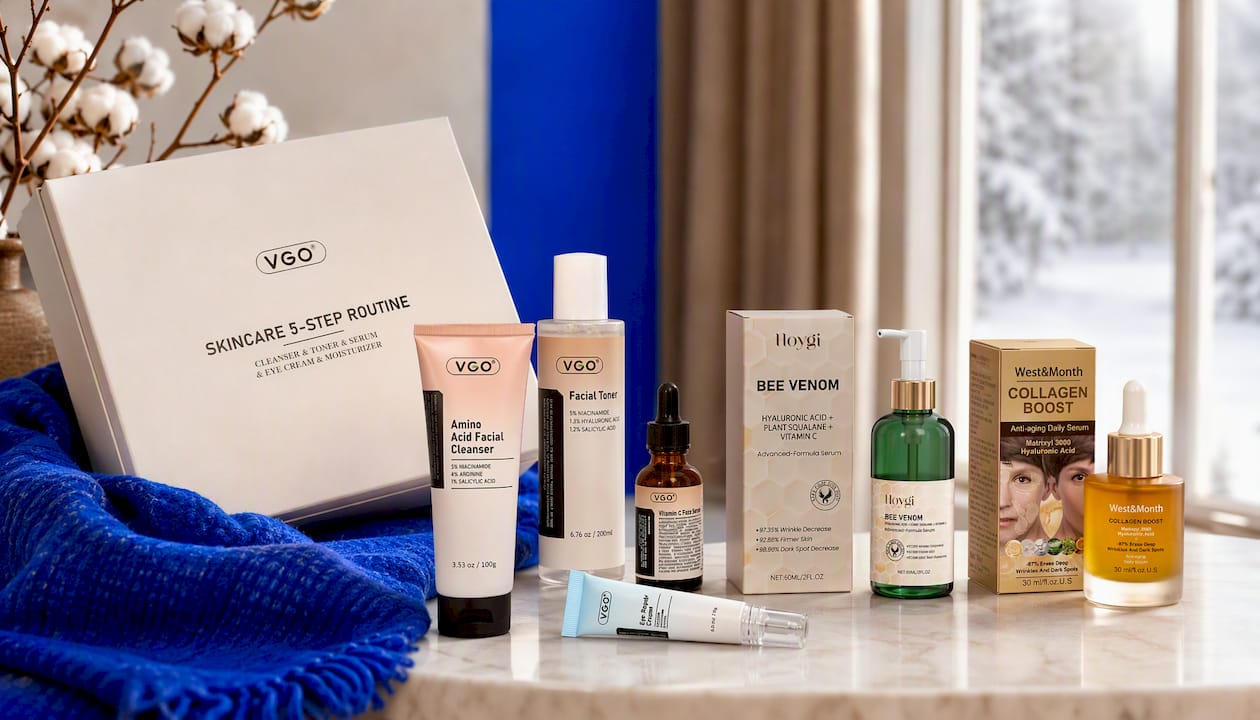
Start slow if your skin is reactive: patch-test on your forearm for a couple of nights, then bring the new products into your routine one at a time rather than all at once, exactly as outlined in the 7-day plan above. If you want to browse textures and formulas before committing to the full set, the moisturizer collection lets you compare options, or you can see the full product range including masks, cleansers, and treatments. Pick your starting point and place your first order today.
Where This Guidance Comes From
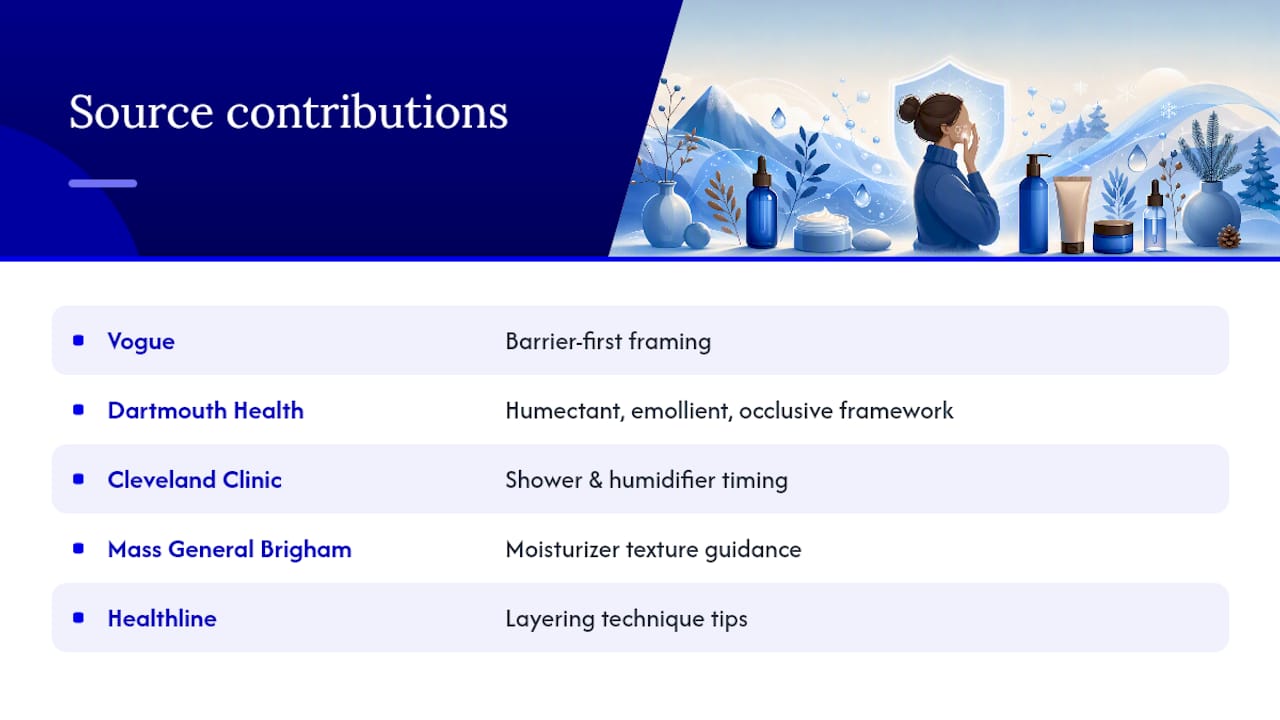
The barrier-first framing in this article draws on dermatologist commentary in Vogue on treating winter changes as a seasonal wardrobe refresh, the humectant, emollient, and occlusive ingredient framework detailed by Dartmouth Health, and the practical shower and humidifier timing recommended by Cleveland Clinic Health Essentials. Additional detail on moisturizer texture and layering technique came from Mass General Brigham and Healthline.
Sources
- 6 steps to keeping your skin barrier strong this winter | Vogue
- Dermatologist-approved tips for healthier winter skin | Dartmouth Health
- Dry skin in winter: 9 tips to keep hydrated | Cleveland Clinic Health Essentials
FAQ
What Is the Best Skincare Routine for Winter?
The best winter routine swaps a foaming cleanser for a cream formula, upgrades to a moisturizer built on humectants, emollients, and an occlusive, and keeps daily sunscreen in place. Adding a humidifier and shortening hot showers rounds out the changes that make the biggest difference.
What Skincare Ingredients Work Best in Cold Weather?
Look for hyaluronic acid and glycerin to draw in moisture, squalane or shea butter to soften skin, and an occlusive like petrolatum to lock hydration in. Dartmouth Health frames this as a three-part system: attract, fill, and seal.
What Are the 5 Steps of a Skincare Routine?
A standard five-step routine runs cleanser, toner, serum, eye cream, and moisturizer, applied in that order so lighter treatments absorb before heavier creams seal them in. Splendoraskincare packages this exact sequence in its 5-step routine bundle.
Should I Change My Skincare Routine in Winter?
Yes, but as a targeted refresh rather than a full overhaul. Swap in a gentler cleanser, a richer moisturizer, and scale back strong actives like retinol or exfoliating acids, while keeping sunscreen on every day regardless of season.
When Should I See a Dermatologist for Winter Dry Skin?
See a dermatologist if cracked skin starts bleeding, a rash spreads, or burning and itching don’t ease within a few days of simplifying your routine. Ordinary tightness and mild flaking usually respond to the swaps above within about a week.