

Vitamin C Serum Benefits: What the 12% Study Shows
Topical vitamin C is an evidence-backed antioxidant that helps neutralize free radical damage, supports collagen production, and modestly brightens uneven tone. Real change takes weeks to months, not days, and it works alongside sunscreen rather than replacing it. Most people tolerate it fine, though high-strength formulas can cause stinging or redness in sensitive skin.
TL;DR:
- A 12% pure L-ascorbic acid serum can increase epidermal thickness by around 16.4% after approximately 84 days of daily use, indicating structural skin improvements.
- Formulation stability is critical, with oxidized serums turning dark and losing effectiveness; packaging should protect against light and air exposure.
- Combining vitamin C with vitamin E and ferulic acid enhances photoprotection, but consistent use and high-quality formulas are essential for visible results.
- Brightening effects may appear within 4 to 6 weeks, while collagen-related firmness and texture improvements typically take 8 to 12 weeks.
- Sensitive skin may need lower concentrations and gradual introduction, with patch testing recommended before full application.
Table of Contents
- Vitamin C Serum Benefits for Skin Brightening and Anti-Aging
- How Vitamin C Serum Works: Mechanisms and Clinical Evidence
- How to Choose a Gentle Vitamin C Serum That Actually Works
- When to Apply Vitamin C Serum: Morning or Night?
- Vitamin C Serum Side Effects and Who Should Be Cautious
- Where Splendoraskincare Fits Into the Vitamin C Picture
- A Practical Take on Vitamin C Serum Results
- Start Your Vitamin C Routine With Splendoraskincare
- Sources
- FAQ
Vitamin C Serum Benefits for Skin Brightening and Anti-Aging
Vitamin C earns its reputation through four distinct jobs it does on your skin, not one vague “glow” effect. Each works on a different timeline, and knowing which one you’re chasing helps you set realistic expectations.
- Antioxidant protection: Vitamin C neutralizes free radicals generated by UV exposure and pollution before they damage collagen and DNA in skin cells.
- Anti-aging support: It acts as a required cofactor for collagen synthesis, and consistent use is linked to improved firmness and elasticity.
- Brightening: Vitamin C inhibits tyrosinase, an enzyme involved in melanin production, which helps fade the look of dark spots and uneven tone over time.
- Texture and radiance: Skin often looks smoother and more reflective within a few weeks, while deeper structural changes take longer to show.
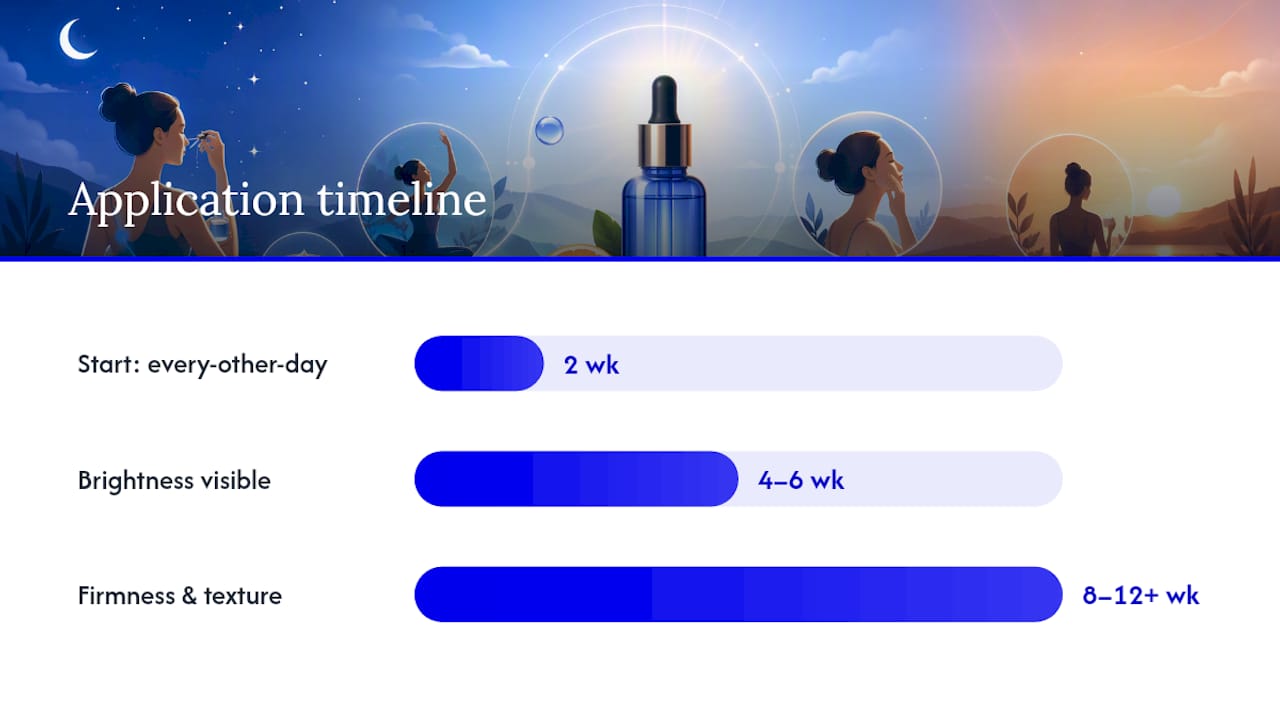
Brightening and surface radiance tend to show up first, sometimes within 4 to 6 weeks. Firmness and texture changes lag behind because they depend on new collagen formation, a slower biological process.
One of the more compelling data points comes from a study of a 12% pure L-ascorbic acid serum, which found a 16.4% increase in epidermal thickness after 84 days, along with measurable improvements in firmness, elasticity, radiance, and pigmentation. That’s roughly three months of daily use to see structural change, not the “overnight glow” the marketing often implies. A broader clinical review of topical vitamin C’s mechanisms and evidence reaches a similar conclusion: benefits are real but formula-dependent, and results vary based on concentration, stability, and how consistently you apply it.
How Vitamin C Serum Works: Mechanisms and Clinical Evidence
Vitamin C’s benefits come down to three biological actions, and understanding them explains why formulation matters so much.
- Antioxidant activity: Ascorbic acid donates electrons to unstable free radical molecules, defusing the oxidative stress that breaks down collagen and accelerates visible aging.
- Collagen hydroxylation: Vitamin C is a required cofactor for enzymes that stabilize collagen’s molecular structure. Without adequate vitamin C, collagen synthesis stalls.
- Tyrosinase inhibition: By blocking this pigment-producing enzyme, vitamin C slows new melanin formation, which helps dark spots fade rather than deepen.
The 12% serum trial mentioned earlier remains one of the more concrete illustrations of this in practice, with its 16.4% epidermal thickness increase at 84 days standing as a measurable, replicable outcome rather than a subjective before-and-after photo.
Here’s a detail most people miss: topical application delivers vitamin C directly to the epidermis at concentrations oral supplements simply can’t match. Your gut regulates how much vitamin C reaches your bloodstream, and skin is far down the priority list for whatever gets absorbed. Applying it directly bypasses that bottleneck entirely.
Pairing vitamin C with vitamin E and ferulic acid also matters more than people assume. Clinical evidence shows this trio provides stronger photoprotection than vitamin C alone, because vitamin E regenerates spent vitamin C molecules and ferulic acid stabilizes both. The honest caveat: large-scale, long-term trials are still limited, and results depend heavily on product quality and consistent use, not the active ingredient alone.
How to Choose a Gentle Vitamin C Serum That Actually Works
Not all vitamin C serums are formulated equally, and picking the wrong one wastes money and risks irritation for nothing.
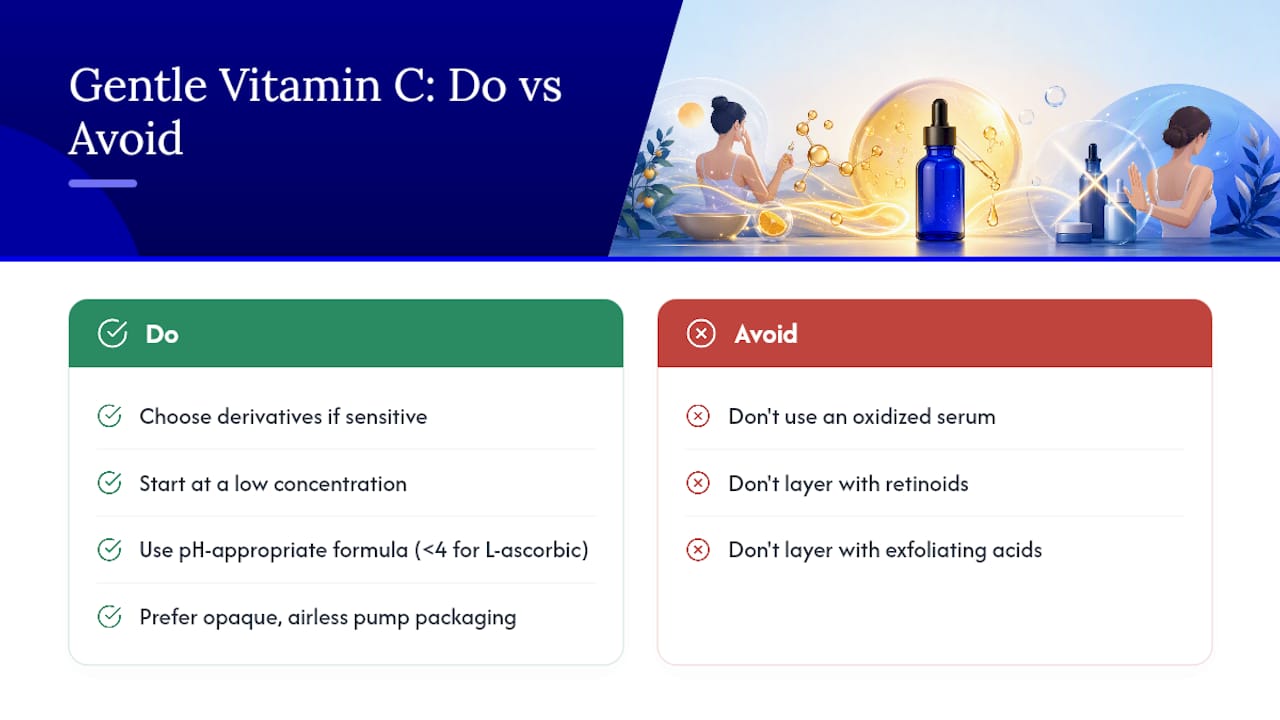
Active form is the first decision point. L-ascorbic acid has the strongest evidence behind it but is notoriously unstable and pH-sensitive. Derivatives like ascorbyl glucoside or tetrahexyldecyl ascorbate trade some potency for better shelf stability. Ascorbyl glucoside requires enzymatic conversion once it’s on your skin, which makes it gentler but slower acting. This is usually the better starting point if you’re looking for a gentle vitamin C serum and want to avoid the sting that pure L-ascorbic acid can cause.
Concentration matters more than marketers let on. If you have vitamin C sensitive skin, starting at the low end of that range is the safer move.
pH and packaging determine whether the active ingredient survives to do anything. L-ascorbic acid generally needs a formulation pH below 4 to penetrate skin effectively. Look for opaque, airless pump packaging. Clear jars exposed to light and air oxidize fast, turning the serum yellow or brown and useless within weeks.
Pro Tip: If your vitamin C serum turns dark amber or smells faintly metallic, it has oxidized. Stop using it. An oxidized serum won’t help your skin and may even irritate it without delivering any antioxidant benefit.
For sensitive or acne-prone skin, pairing vitamin C with a peptide complex serum can help reinforce the skin barrier while you introduce the antioxidant. Avoid layering vitamin C directly with retinoids or fresh exfoliating acids in the same session. That combination compounds irritation without adding benefit.
When to Apply Vitamin C Serum: Morning or Night?
The order you apply products in matters almost as much as which product you choose.
- Cleanse first to remove oil and debris that block absorption.
- Apply vitamin C serum to dry skin, a few drops across the face and neck, while skin is still slightly damp from cleansing.
- Follow with moisturizer to lock in hydration and soften any tingling from the active ingredient.
- Finish with broad-spectrum sunscreen if it’s morning. Vitamin C boosts your skin’s defense against UV-triggered free radicals, but it doesn’t replace SPF.
Morning application makes the most practical sense since vitamin C and sunscreen work as a team against daytime UV exposure. Night use is not wrong, and some people prefer it because it avoids any layering conflicts with makeup. If you’re wondering whether vitamin C serum works better morning or night, the honest answer is that consistency matters more than the clock.
If you have sensitive skin, start every other day for the first two weeks before working up to daily use. Keep your bottle away from windowsills and bathroom heat. Expect visible brightness improvements within 4 to 6 weeks, with firmness and texture changes taking 8 to 12 weeks or longer.
Vitamin C Serum Side Effects and Who Should Be Cautious
Vitamin C is generally well tolerated, but it’s not risk-free for everyone.
- Mild stinging or tingling on application is common, especially with L-ascorbic acid formulas above 10%.
- Redness or dryness can occur in the first two weeks as skin adjusts.
- Patch test first: apply a small amount to your inner forearm for two nights before using it on your face.
- Reduce frequency or concentration if irritation persists beyond two weeks rather than pushing through it.
- See a dermatologist if you notice severe reactions, swelling, or any suspicious new lesion. Vitamin C serum is supportive skincare, not a treatment for medical skin conditions.
If a serum has darkened in color or developed an off smell, it has oxidized. Discard it. Continued use won’t hurt you in most cases, but it also won’t help.
Where Splendoraskincare Fits Into the Vitamin C Picture
Splendoraskincare builds its skincare around clean, vegan, and gluten-free ingredients, avoiding artificial additives while favoring hand-harvested, California-grown components. That approach lines up with what the selection criteria above call for: recognizable actives, minimal filler, and formulas built for actual use rather than shelf appeal.
The brand’s turmeric vitamin C facial cleanser brings vitamin C into the cleansing step, giving readers a second touchpoint for the ingredient without adding another serum layer. For readers focused on firmness and fine lines, the anti-wrinkle whitening facial serum targets similar collagen and brightening goals discussed above. Splendoraskincare’s broader serums and treatments collection reflects the same sustainability and simplicity commitment across its formulations.
A Practical Take on Vitamin C Serum Results
Chasing the highest percentage or the trendiest formula misses the point. What moves the needle is showing up daily, layering sunscreen every single morning, and picking a serum stabilized with vitamin E and ferulic acid rather than one that oxidizes in a month. Track your skin with photos every two weeks, not daily, since day-to-day changes are invisible and discouraging to watch for. Give it 8 to 12 weeks minimum before judging results, and see a dermatologist if you’re dealing with stubborn pigmentation or significant sun damage that over-the-counter products aren’t touching.
— Cyril
Start Your Vitamin C Routine With Splendoraskincare
Splendoraskincare emphasizes clean, vegan, gluten-free, cruelty-free formulas with hand-harvested ingredients and avoids adding artificial components.
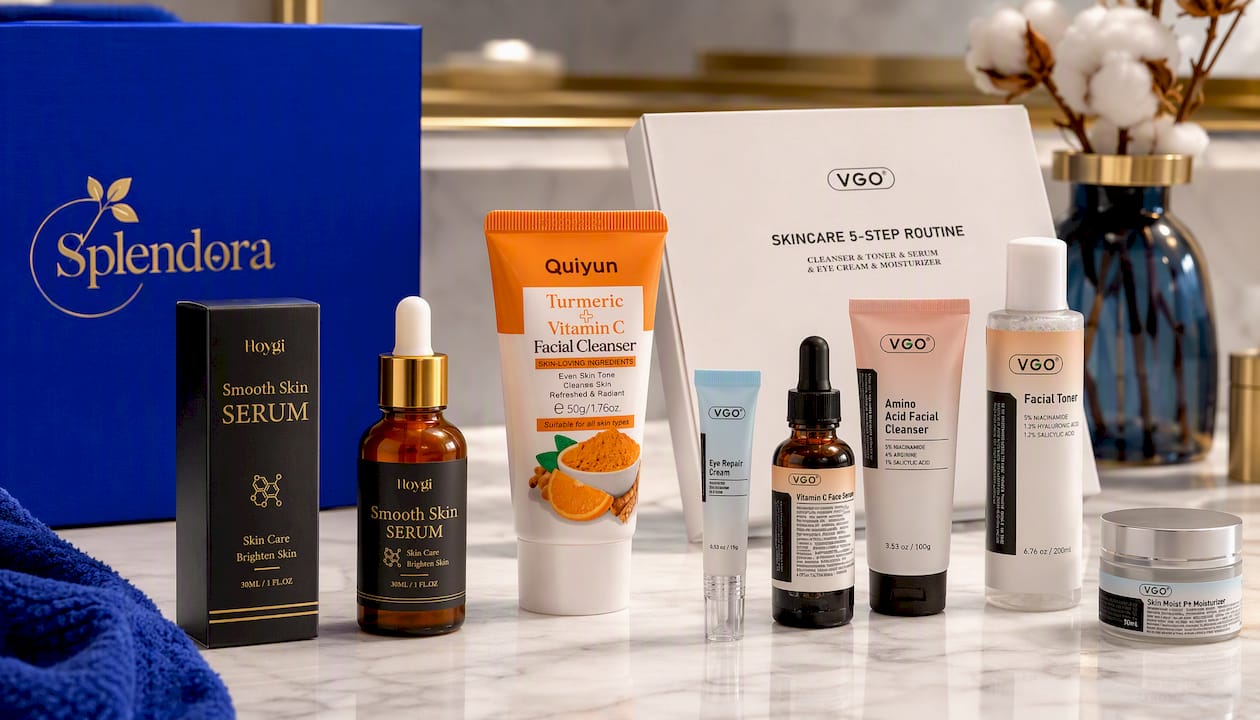
If you’re ready to start, the Smooth Skin Serum is a solid entry point for most skin types looking for daily brightening support. If you want vitamin C at more than one step in your routine, pair it with the turmeric vitamin C cleanser for a gentle, hydrating wash that reinforces what your serum is doing. And if you’d rather not piece together a routine product by product, the 5-step routine set bundles cleanser, toner, serum, eye cream, and moisturizer in the correct layering order discussed above. For anyone building out hydration or SPF alongside these picks, browse the full Splendoraskincare catalog to round out your routine.
This article is general information, not a substitute for advice from a qualified doctor. Consult a qualified healthcare professional about your own circumstances before acting on anything here.
Sources
- Clinical Efficacy of a 12% Pure Vitamin C Serum Across All Skin Phototypes: An Integrated In Vitro–In Vivo Evaluation (Springer Nature)
- Topical Vitamin C and the Skin: Mechanisms of Action and Clinical Applications (PMC review)
- What Can Vitamin C Do for Your Skin? (Cleveland Clinic)
- Antioxidant combinations and topical stability studies (PubMed entry supporting vitamin C + vitamin E + ferulic synergy)
- Vitamin C in skin health: assessment of dietary vs topical delivery (PMC article)
FAQ
Is Vitamin C Serum Good to Use Every Day?
Yes, daily use is standard and how most clinical benefits were measured, including the 16.4% epidermal thickness increase seen after 84 days of consistent application. If you have sensitive skin, ease in with every-other-day use for the first two weeks before going daily.
Is Vitamin C Serum Better Than Hyaluronic Acid?
They’re not competitors since they solve different problems. Vitamin C is an antioxidant that supports collagen and brightening, while hyaluronic acid draws and holds moisture in skin. Most complete routines use both, layering hyaluronic acid for hydration alongside or after vitamin C for antioxidant coverage.
What Are the Downsides of Vitamin C Serum for the Face?
The main downsides are irritation risk at higher concentrations and formula instability. L-ascorbic acid oxidizes quickly when exposed to light and air, turning ineffective or even mildly irritating. Choosing opaque, airless packaging and starting at a lower concentration minimizes both issues.
How Long Until I See Results From Vitamin C Serum?
Brightening and surface radiance often appear within 4 to 6 weeks of consistent use. Firmness and texture changes, tied to collagen production, typically take 8 to 12 weeks or longer, as shown in the 84-day serum study.
Should I Choose Vitamin C or Niacinamide?
Both address tone and texture but through different mechanisms. Vitamin C leans harder into antioxidant defense and collagen support, while niacinamide focuses more on barrier strength and oil regulation, and many people use both in the same routine at different times of day to avoid stacking irritation.