

How to Repair Skin Barrier Damage in 2 to 4 Weeks
If your skin stings when you apply products, feels tight after cleansing, or has turned reactive overnight, stop your actives and switch to a gentle low-pH cleanser, a ceramide-rich moisturizer, and daily sunscreen. That combination is how you repair a skin barrier, and it starts working within days.
Here’s your one-hour checklist:
- Stop all exfoliants, retinoids, and acne actives immediately
- Wash with lukewarm water and a gentle, fragrance-free cleanser
- Apply a ceramide-based moisturizer to damp skin
- Layer on broad-spectrum sunscreen if it’s daytime
Pro Tip: Most people feel some relief within a few days, and see clearer improvement in 2 to 4 weeks. Severe, oozing, or spreading irritation needs a clinician, not more product.
Key Takeaways
Repairing a damaged skin barrier requires pausing active ingredients, cleansing gently at a low pH, moisturizing with physiological lipids, and protecting skin daily with sunscreen.
| Point | Details |
|---|---|
| Pause actives first | Stop AHAs, BHAs, retinoids, and scrubs immediately until stinging and flaking resolve. |
| Cleanse gently | Use a low-pH, fragrance-free cleanser with lukewarm water for under a minute. |
| Rebuild with lipids | Choose moisturizers combining ceramides, cholesterol, and fatty acids for best results. |
| Expect 2 to 4 weeks | Mild relief starts in days; visible healing typically takes 2 to 4 weeks. |
| Splendoraskincare fits each step | Its 5-step routine kit, delicate skin moisturizer, and soothing sunscreen map directly to the repair protocol. |
Table of Contents
- What Is the Skin Barrier and Why Does It Matter?
- How Do You Know If Your Skin Barrier Is Damaged?
- What Actually Causes a Damaged Skin Barrier?
- How Do You Repair a Damaged Skin Barrier Step by Step?
- What’s a Realistic Timeline for Skin Barrier Recovery?
- When Should You See a Dermatologist for a Skin Barrier Problem?
- How Does Splendoraskincare Support Barrier Repair?
- Skin Barrier Damage or Something Else? A Quick Identification Guide
- What Environmental and Lifestyle Changes Help Barrier Repair?
- Does Diet and Hydration Actually Affect Your Skin Barrier?
- Can Masks, Oils, or Supplements Speed Up Barrier Repair?
- What Are the Biggest Myths About Skin Barrier Repair?
- How Do You Keep Your Skin Barrier Healthy Long Term?
- What the Skincare Industry Gets Wrong About Barrier Repair
- Ready to Rebuild Your Routine the Simple Way?
- Sources
What Is the Skin Barrier and Why Does It Matter?
Think of your skin like a brick wall. The “bricks” are skin cells (corneocytes), and the “mortar” is a lipid matrix made of ceramides, cholesterol, and fatty acids. Together they form the stratum corneum, the outermost layer that keeps water in and irritants out.
When that mortar breaks down, water escapes faster than it should. Dermatologists call this transepidermal water loss, or TEWL. Higher TEWL means:
- Moisture leaves your skin faster than it’s replaced
- Irritants, allergens, and bacteria penetrate more easily
- Nerve endings become more exposed, which is why products suddenly sting
That stinging isn’t your skin being dramatic. It’s a physical gap in the lipid layer letting ingredients reach nerve fibers they normally never touch.
How Do You Know If Your Skin Barrier Is Damaged?
Run through these checks before you assume it’s just “sensitive skin”:
- Does your usual moisturizer or sunscreen sting or burn on contact? That’s a strong barrier-damage signal, not a sign the product is bad.
- Does your skin look dull, feel rough, or flake in patches that weren’t there a month ago?
- Did symptoms start right after a new active, a facial treatment, or a change in weather? Timing usually points to the cause.
- Are you breaking out in new spots despite no diet or hormone changes? A weakened barrier lets bacteria in more easily, which shows up as unexpected acne.
- Is there severe pain, oozing, bleeding, or spreading redness? That’s beyond self-care. See a clinician.
If products that never bothered you before now burn, that’s the clearest tell of all.
What Actually Causes a Damaged Skin Barrier?
Most damage comes from stacking too much, too fast. Common culprits include:
- Over-exfoliating or combining AHAs, BHAs, and retinoids in the same week
- Harsh, high-pH bar soaps or sulfate-heavy cleansers
- Long, hot showers that strip lipids faster than they can rebuild
- Rough washcloths, scrub brushes, or aggressive rubbing during cleansing
- Cold, dry air, pollution, and even poor sleep or chronic stress
Mechanical stress is the most underrated one. Rubbing and vigorous application cause microtrauma on their own, even after you’ve cut out the harsh actives.
Pro Tip: Pat products into skin instead of rubbing them in. The friction from massaging in a thick cream can undo progress even when your ingredients are gentle.
How Do You Repair a Damaged Skin Barrier Step by Step?
Repairing your barrier isn’t about adding more products. It’s about subtracting the wrong ones first, then rebuilding with the right few.
Step 1: Stop the aggressors. Pause every AHA, BHA, retinoid, physical scrub, and prescription acne active. This isn’t a two-day break. Give it until stinging and flaking fully resolve.
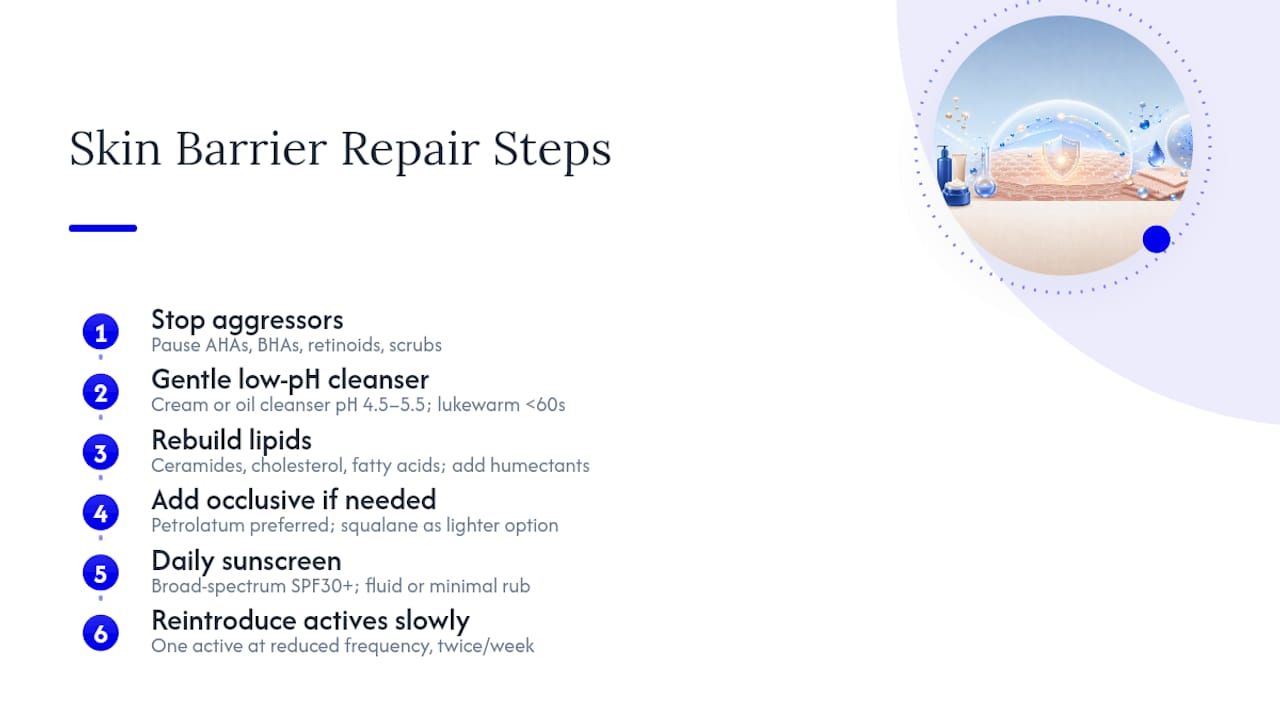
Step 2: Switch to a gentle, low-pH cleanser. Look for a cream or oil cleanser in the 4.5 to 5.5 pH range. Wash with lukewarm water, never hot, and keep the whole cleanse under 60 seconds. Over-cleansing is one of the most overlooked triggers of ongoing irritation, so less really is more here.
Step 3: Rebuild with physiological lipids. Your moisturizer needs to include a combination of ceramides, cholesterol, and fatty acids. Research consistently shows combined lipid formulations outperform single-ingredient moisturizers for reducing water loss. Layer in humectants like glycerin or hyaluronic acid for hydration, and apply everything to slightly damp skin so it locks moisture in rather than sitting on top of dry cells.
Step 4: Add an occlusive if skin is severely compromised. Petrolatum remains the single most effective occlusive for sealing in moisture short term. Squalane works as a lighter alternative if petrolatum feels too heavy for your skin type.
Step 5: Never skip sunscreen. Damaged skin burns and inflames faster. Use a broad-spectrum SPF 30 or higher daily, and choose a fluid or minimal-rub formula. This matters twice as much on compromised skin, since sun exposure actively slows healing.
Step 6: Reintroduce actives one at a time. Once stinging is gone and flaking has cleared, bring back a single active at reduced frequency, like twice a week instead of daily. Stepwise reintroduction reduces relapse risk and helps you actually identify what triggered the damage in the first place.
What’s a Realistic Timeline for Skin Barrier Recovery?
Mild irritation often eases within a few days. More visible healing, less flaking, less stinging, better texture, tends to show up in 2 to 4 weeks of consistent care. Chronic or repeated damage can take months to fully resolve.
Common reasons recovery stalls:
- Reintroducing actives too early, before stinging has fully stopped
- Continuing to use rough cloths, hot water, or vigorous scrubbing
- Choosing a moisturizer with fragrance or alcohol that re-irritates skin
If you add an occlusive and see improvement, keep it as a nightly step until skin normalizes, then scale back. Patch-test any reintroduced active on a small area for two to three days before applying it to your full face.
When Should You See a Dermatologist for a Skin Barrier Problem?
Get care immediately if you notice severe pain, bleeding, oozing, or spreading redness. Those can signal infection, which needs treatment beyond moisturizer and rest.
See a clinician on a non-urgent basis if:
- There’s no improvement after four or more weeks of consistent gentle care
- You suspect allergic contact dermatitis from a specific product
- Symptoms look more like chronic eczema or rosacea than simple irritation
A dermatologist can run patch testing, prescribe targeted topicals, and build a reintroduction plan tailored to what’s actually triggering your skin, rather than guessing your way through it.
How Does Splendoraskincare Support Barrier Repair?
Each stage of the repair scaffold has a direct product match. Splendoraskincare built its lineup around cruelty-free, vegan, and gluten-free formulas using clean, hand-harvested ingredients, which matters during repair since fewer additives means fewer chances to re-irritate healing skin.
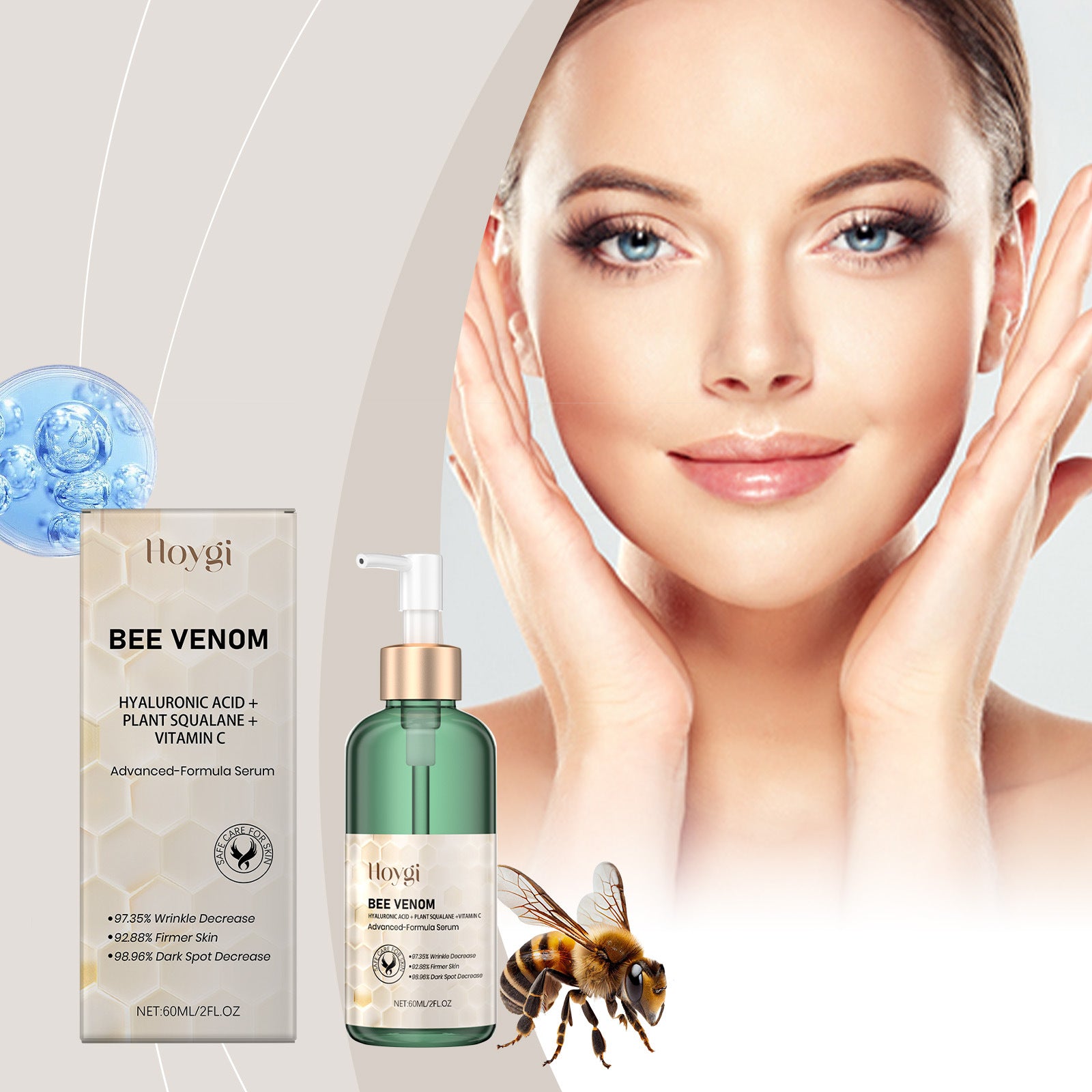
- Cleansing and full routine: the 5-step routine kit covers cleanser, toner, serum, eye cream, and moisturizer in one sequence, useful if you want a complete, simplified regimen rather than assembling five separate products.
- Moisturizing: the Facial Skin Moisturizing Lotion for Delicate Skin is formulated for reactive, compromised skin that needs hydration without added irritation.
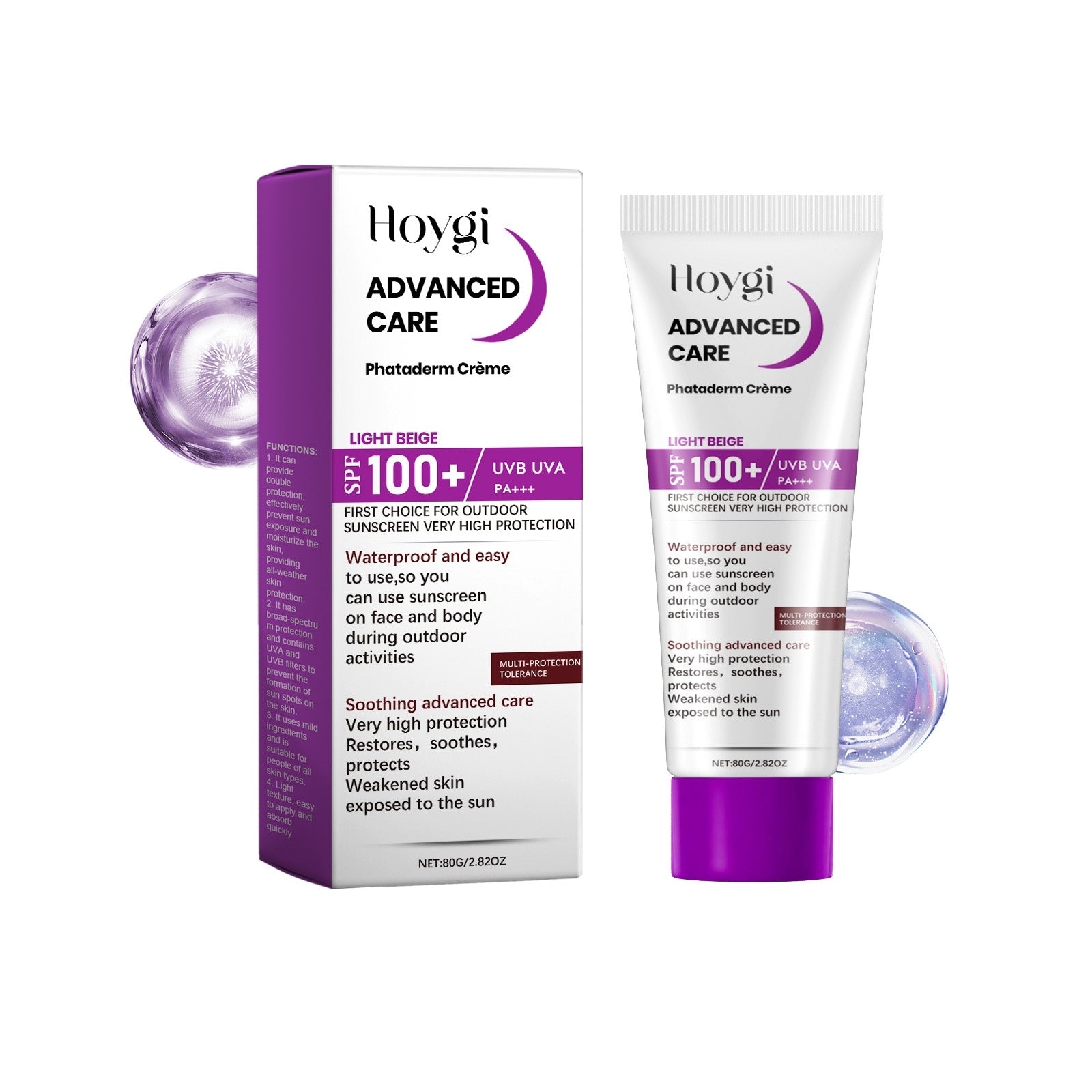
- Sun protection: the Soothing and Repairing Sunscreen fits the daily SPF step without the heavy, dragging texture that causes friction on healing skin.
| Repair step | Splendoraskincare product |
|---|---|
| Cleanse and simplify | 5-step routine kit |
| Moisturize with lipids | Facial Skin Moisturizing Lotion, Delicate Skin |
| Protect daily | Soothing and Repairing Sunscreen |
Skin Barrier Damage or Something Else? A Quick Identification Guide
Barrier damage overlaps with eczema, rosacea, and irritant contact dermatitis, and mistaking one for another leads people to treat the wrong problem for weeks.
Start with onset and pattern. Barrier damage usually follows a specific event: a new retinoid, an over-exfoliating streak, a harsh cleanser switch. Symptoms appear broadly across the face within days of that change. Eczema, by contrast, often has a longer personal or family history and tends to show up in recurring patches, commonly around the eyes, neck, or joints, regardless of what products you’re using.
Check the visual texture. Barrier damage typically looks like generalized dryness, flaking, and dullness without raised bumps. Rosacea shows persistent redness concentrated on the cheeks, nose, and forehead, often with visible small blood vessels and sometimes bumps resembling acne. Eczema presents as defined, often scaly or weepy patches with more intense itching than stinging.
Test your reaction to bland products. If a fragrance-free, ceramide-based moisturizer calms things down within a few days, that points to barrier damage. If redness and itching persist despite gentle care, rosacea or eczema become more likely, and that’s your cue to see a dermatologist rather than keep adjusting products yourself.
Look at triggers. Barrier damage responds to removing aggressors. Rosacea flares with heat, alcohol, spicy food, and sun exposure even when your routine hasn’t changed. Eczema often flares with specific allergens, stress, or seasonal shifts.
When the picture is mixed, a dermatologist can confirm with a simple exam rather than months of trial and error.
What Environmental and Lifestyle Changes Help Barrier Repair?
Your skin doesn’t heal in isolation from the rest of your life. A few adjustments outside your routine speed things along noticeably.
Control indoor humidity. Cold, dry air pulls moisture straight out of compromised skin. A humidifier in your bedroom, especially during winter months or in air-conditioned spaces, keeps ambient moisture levels from working against your moisturizer.
Cut down shower length and heat. Long, hot showers strip lipids from your entire body, not just your face. Keep showers under ten minutes and lukewarm rather than hot, particularly while your face is actively healing.
Prioritize sleep. Skin repairs cellular turnover overnight. Chronically short sleep slows that process, which is part of why stressed, sleep-deprived people often see slower barrier recovery even with a perfect routine.
Manage stress deliberately. Cortisol spikes are linked to inflammation and can interfere with lipid production. This doesn’t mean eliminating stress; it means noticing when a stressful stretch coincides with a flare and adjusting your routine to be even gentler during those weeks.
Watch your fabric and laundry choices. Rough pillowcases and fragranced laundry detergent contact your face for hours every night. Switching to a fragrance-free detergent and a softer pillowcase removes a source of friction and chemical exposure you might not have connected to your skin.
None of these replace the topical routine. They remove obstacles that make that routine work harder than it needs to.
Does Diet and Hydration Actually Affect Your Skin Barrier?
Drinking more water alone won’t rebuild a damaged barrier, but chronic dehydration and poor nutrition do make repair slower.
Essential fatty acids matter directly. Omega-3 and omega-6 fatty acids, found in fish, walnuts, and flaxseed, are building blocks for the same lipid matrix your moisturizer is trying to restore topically. A diet consistently low in these fats gives your skin less raw material to work with internally.
Hydration supports, but doesn’t replace, topical moisture. Water intake affects overall skin plumpness and function, but it can’t substitute for a ceramide-rich moisturizer applied directly to compromised skin. Think of hydration as supporting the system, not fixing the leak.
Alcohol and high sugar intake work against you. Both are linked to increased inflammation, which can slow the same repair processes you’re trying to support with your routine. Cutting back during an active flare, even temporarily, removes one more variable working against you.
Protein intake supports skin cell turnover. Corneocytes, the “bricks” in your skin barrier, are protein-based structures. Adequate protein intake gives your body what it needs to keep producing new, healthy cells as damaged ones shed.
None of this replaces the topical steps. But someone eating a nutrient-poor diet, sleeping four hours a night, and skipping water is fighting their own repair routine from the inside.
Can Masks, Oils, or Supplements Speed Up Barrier Repair?
Supportive treatments can help, but timing and formulation matter more than the category itself.
Calming masks with ingredients like oat extract, centella asiatica, or ceramides can offer short-term relief for tightness and redness. Use them as an occasional add-on, not a replacement for your daily moisturizer, and skip any mask with clay, charcoal, or exfoliating acids while your skin is healing.
Facial oils can supplement your moisturizer’s occlusive layer, particularly in very dry climates. Squalane and jojoba oil are generally well-tolerated additions. Apply oil after your moisturizer, not instead of it, since oils alone don’t provide the same water-holding humectants that glycerin or hyaluronic acid do.
Supplements like omega-3s or collagen peptides may support skin function over time, but they work on a much slower timeline than topical care and shouldn’t be treated as a quick fix for an active flare.
The mistake most people make with supportive treatments is layering too many at once. Adding a mask, an oil, and a new supplement in the same week you’re also trying to identify your triggers makes it impossible to know what’s helping and what’s not. Introduce one supportive treatment at a time, the same rule that applies to reintroducing actives.
What Are the Biggest Myths About Skin Barrier Repair?
Myth: more moisturizer is always better. Over-moisturizing, especially with heavy, occlusive-only products applied too often, can trap excess oil and disrupt the skin’s natural balance rather than help it. The fix is the right formulation applied at the right frequency, not simply piling on more product.
Myth: if it stings, it’s working. Stinging on compromised skin is a sign of damage, not effectiveness. Products that make barrier-damaged skin burn should be paused, not pushed through.
Myth: natural or organic ingredients can’t cause irritation. Essential oils, citrus extracts, and certain “natural” preservatives are common irritants regardless of their marketing. Fragrance-free matters more than “natural” during active repair.
Myth: you need a ten-step routine to heal. The opposite is closer to true. Fewer products, applied consistently, outperform a crowded routine every time during active barrier repair.
Myth: once it’s healed, you’re done. Barrier health isn’t a one-time fix. Skipping sunscreen or reintroducing harsh actives too aggressively after recovery can trigger the same cycle again.
How Do You Keep Your Skin Barrier Healthy Long Term?
Recovery isn’t the finish line. Maintaining a healthy barrier means keeping the habits that fixed it, even after symptoms disappear.
Stick with a simplified routine as your baseline: gentle cleanser, ceramide moisturizer, daily sunscreen. Add actives back in gradually and never more than one new ingredient at a time, spaced a few weeks apart so you can track how skin responds.
Keep cleansing gentle permanently, not just during a flare. The lukewarm water and short-duration habit that helped you heal is also what prevents the next flare.
Reassess your routine seasonally. Skin that tolerated a retinoid in summer might not tolerate the same frequency once winter air dries things out. Adjust actives downward during colder months rather than waiting for symptoms to reappear.
Watch for early signals. Mild tightness or a slight sting from a product you’ve used for months is worth noting before it becomes full-blown irritation. Catching it early usually means a few days of simplification instead of a few weeks.
What the Skincare Industry Gets Wrong About Barrier Repair
Most advice on this topic treats barrier repair like a shopping list: buy the right serum, add the right oil, problem solved. That’s backward. The research is consistent that subtraction does more work than addition. Pausing actives and simplifying your routine matters more than which specific ceramide cream you pick, yet nearly every article buries that point under ten product recommendations.
The other thing conventional advice underplays is mechanical stress. Everyone talks about ingredients and almost nobody talks about how you’re applying them. Rubbing in a $60 moisturizer aggressively causes real damage that no formulation can offset. Pat, don’t rub. It sounds too simple to matter, but the evidence on microtrauma backs it up.
If you take one thing from this article, prioritize the sequence: stop, simplify, moisturize with real lipids, protect with sunscreen. Reintroduce actives only after your skin stops arguing with you. Everything else, masks, oils, supplements, is support staff, not the main event.
— Cyril
Ready to Rebuild Your Routine the Simple Way?
You don’t need five brands and a dozen bottles to repair your barrier. Splendoraskincare built its lineup specifically to cover the essentials without the guesswork: a gentle, hand-harvested-ingredient formula for each step, vegan and gluten-free, with nothing extra to fight your healing skin.
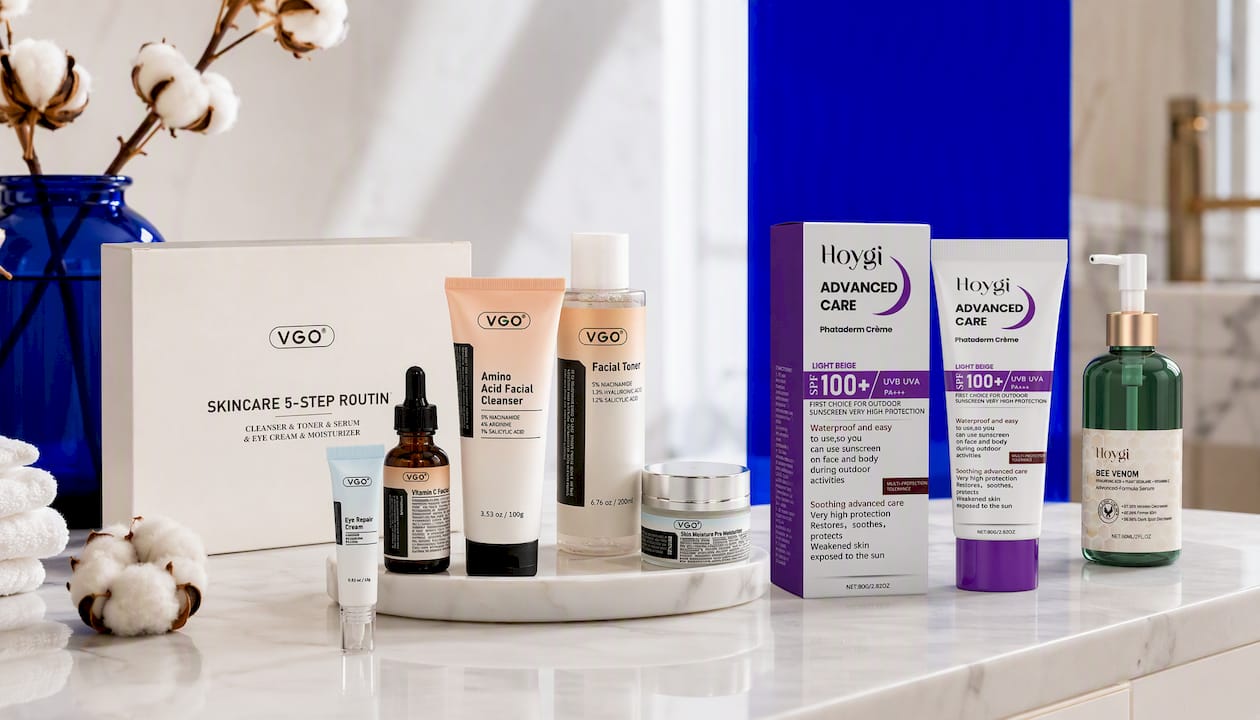
If you’re mid-repair right now, start with the Facial Skin Moisturizing Lotion for Delicate Skin to rebuild your lipid layer, pair it with the Soothing and Repairing Sunscreen for daily protection, or grab the full 5-step routine kit if you’d rather have the entire sequence handled in one order. Check the product pages for ingredient lists and pick the combination that matches where your skin is right now.
Sources
- PMC5608132 — review on skin barrier and moisturizers
- How to repair and protect the skin barrier — CVS
- Skin barrier: Healthline explainer