

Yes, Paraben-Free Skincare Is Easy to Find. Here's Where to Start
Paraben-free skincare is no longer a niche category. It’s the default on most drugstore and clean-beauty shelves, and choosing it is a reasonable preference for anyone who wants fewer synthetic preservatives in a daily routine without giving up effectiveness. If you’re shopping right now, three Splendoraskincare formulas cover the most common needs:
- Organic Skin Tag Removal Serum — a targeted treatment serum for skin tags and rough texture concerns
- Smooth Skin Serum — a daily leave-on serum for smoothing texture and refining tone
- Skincare Anti-Aging Anti-Wrinkle Whitening Facial Serum — a multi-benefit serum aimed at fine lines, uneven tone, and brightening
One thing worth knowing before you buy anything: “paraben-free” is a voluntary label, not a regulated safety claim. It tells you what’s missing, not what replaced it. Every paraben-free product still needs some preservative system to stay safe from mold and bacteria, so the smart move is checking what’s on the ingredient list instead of stopping at the front-of-package claim.
Key Takeaways
Paraben-free skincare works as well as any conventional formula when the active ingredients are solid, and the real safety question is what preservative replaced the parabens, not whether parabens are absent.
| Point | Details |
|---|---|
| Label meaning | “Paraben-free” only confirms one ingredient family is missing; it doesn’t guarantee a gentler or safer overall formula. |
| Check the replacement | Watch for methylisothiazolinone or MCI on paraben-free labels since they carry a higher allergy risk than parabens. |
| Regulatory context | The FDA reports no current evidence of harm at cosmetic use levels, and a 2020 expert panel cleared 20 of 21 parabens at current concentrations. |
| Switch one product at a time | Trial a new moisturizer or serum for 2 to 3 weeks while holding the rest of your routine steady to isolate reactions. |
| Splendoraskincare fits this approach | Its cruelty-free, vegan, hand-harvested formulas, including Smooth Skin Serum and the Organic Skin Tag Removal Serum, pair paraben-free ingredient lists with barrier-friendly formulation. |
Table of Contents
- Where You’ll Find Paraben-Free Skincare Products
- How Do You Choose a Good Paraben-Free Product?
- What Do the FDA and Dermatology Experts Actually Say About Parabens?
- How Do You Safely Switch to a Paraben-Free Routine?
- Does Paraben-Free Skincare Cost More?
- Which Brands and Certifications Signal Real Paraben-Free Standards?
- Do Paraben-Free Products Actually Work as Well as Regular Ones?
- The Gap Between Paraben Fear and Paraben Fact
- Build a Simple Paraben-Free Routine With Splendoraskincare
- Sources
Where You’ll Find Paraben-Free Skincare Products
Paraben-free formulas now show up across nearly every skincare category, not just the “natural” corner of the store. Cleansers, moisturizers, serums, sunscreens, makeup, haircare, and body products all carry paraben-free versions today, and in many categories it’s become the majority formulation rather than the exception.
That range matters because not every category carries the same stakes. A cleanser sits on your skin for maybe 30 seconds before you rinse it off. A moisturizer, serum, or sunscreen stays there for hours, sometimes overnight. Preservatives exist to stop contamination, and the amount of preservative a formula needs is tied partly to how long the product sits in a jar being opened and closed, and partly to how long it sits on your skin.
Rinse-off products (cleansers, shampoos, body washes) get diluted with water almost immediately and washed away. Whatever preservative system they use matters less for cumulative skin exposure.
Leave-on products (moisturizers, serums, sunscreen, most makeup) stay in contact with skin for extended periods. This is where ingredient scrutiny actually pays off, and where a shopper focused on avoiding parabens should spend the most attention.
Packaging design offers a useful shortcut here. Formulas in airless pump dispensers, waterless balms, or single-use ampoules face far less air and bacterial exposure every time you use them, compared to a jar you’re dipping fingers into daily. That lower contamination risk sometimes allows brands to use gentler or lower-concentration preservative systems while keeping the product stable.
A few practical signals to look for while browsing:
- Pump or airless bottle instead of an open jar (less air exposure per use)
- Shorter overall ingredient list, which often correlates with simpler preservative needs
- Single-use packets or ampoules for occasional-use treatments
- Products explicitly formulated for sensitive or reactive skin, which tend to use milder preservative blends
None of these signals guarantee a “better” product on their own. But combined with an actual ingredient check, they narrow the field fast when you’re standing in front of forty nearly identical serums trying to make a decision in under five minutes.
How Do You Choose a Good Paraben-Free Product?
Reading a label for parabens is easier than most people expect once you know the pattern. Parabens almost always end in one of four suffixes: methylparaben, propylparaben, butylparaben, or ethylparaben. If none of those appear anywhere on the ingredient list, the product qualifies as paraben-free, regardless of what the front label claims.
The harder question is what replaced them. Formulators don’t leave a preservative-shaped hole in a formula. They swap in something else, and not all replacements carry the same track record.
Common paraben alternatives and their trade-offs:
- Phenoxyethanol — widely used, generally well tolerated, considered one of the milder options
- Sodium benzoate paired with potassium sorbate — a common natural-leaning combination, effective at typical use levels
- Methylisothiazolinone / methylchloroisothiazolinone (MI/MCI) — effective preservatives, but clinical evidence links them to a meaningfully higher rate of allergic contact dermatitis than parabens carry
That last point deserves attention because it cuts against the assumption that “paraben-free” automatically means “gentler.” Sometimes it means the opposite. If you have a history of skin reactions, checking for MI/MCI on a paraben-free label is at least as important as checking for the parabens themselves.
For anyone with sensitive or reactive skin, dermatology guidance generally points to a different priority order. Removing fragrance and supporting the skin barrier tends to reduce irritation more reliably than swapping preservatives alone, according to eczema-focused clinical guidance. That means favoring fragrance-free formulas with a short ingredient list, and looking for barrier-supporting ingredients like ceramides, glycerin, or hyaluronic acid ahead of chasing a paraben-free badge in isolation.
Pro Tip: Before switching a product to “go paraben-free,” check whether it’s a leave-on or rinse-off item first. Spend your scrutiny budget on serums, moisturizers, and sunscreen. A paraben-free shampoo is a nice-to-have; a paraben-free moisturizer is where the exposure difference actually shows up.
Function should guide how cautious you get. A rinse-off cleanser with parabens low on the ingredient list is a low-stakes item for most people. An overnight leave-on serum is where ingredient-list literacy earns its keep.
What Do the FDA and Dermatology Experts Actually Say About Parabens?
The official position is more measured than most headlines suggest. As of late 2025, the FDA states plainly that it has no information showing parabens, as currently used in cosmetics, have a known effect on human health, while noting that regulatory review of the evidence continues.
That’s not a blanket endorsement, and it’s not a warning either. It’s an agency saying the current evidence doesn’t clear the bar for concern at typical use levels, while leaving the door open to revisit that if new evidence changes the picture.
The more detailed scientific review comes from a 2020 expert panel, which evaluated 21 individual parabens used in cosmetics.
The panel concluded that 20 of the 21 parabens assessed are safe for use in cosmetics at current concentrations, provided the combined total of parabens in a single formulation remains below identified safety thresholds.
It comes directly from the 2020 amended safety assessment of parabens, and it’s the closest thing to a hard scientific line in this entire conversation.
The caveats worth flagging live in laboratory research, not population health data. Cell studies have found that certain parabens, notably butylparaben and benzylparaben, show higher cytotoxicity in keratinocyte models at high concentrations than milder parabens like methylparaben or ethylparaben. Those findings matter for research direction, but they describe lab conditions using concentrations well above what a typical cosmetic formula contains, not evidence of harm at normal use levels.
There’s a second caveat that cuts the other way: some paraben replacements carry their own downsides. Isothiazolinone preservatives (MI/MCI) have a documented higher rate of triggering allergic contact dermatitis compared with parabens. Removing one ingredient class doesn’t guarantee you’ve reduced your total irritation risk.
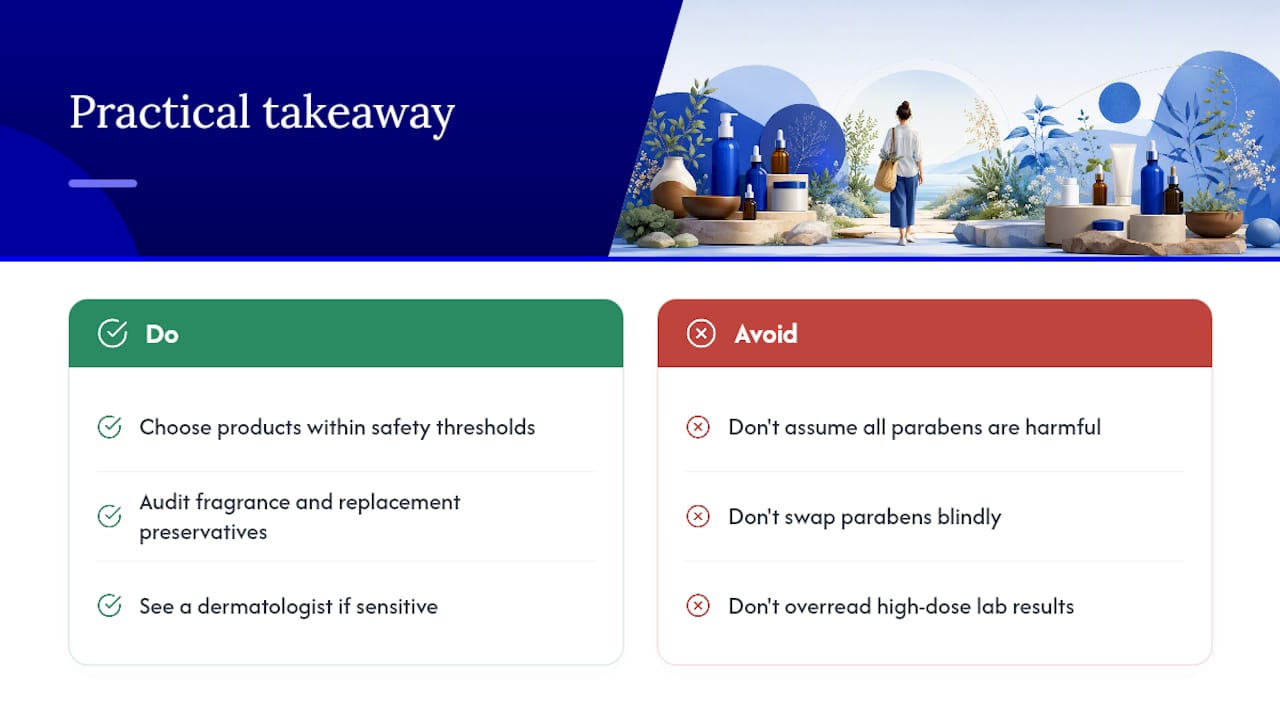
Put together, the practical read is this: for most people, parabens at regulated cosmetic concentrations are not the highest-risk ingredient in a routine. For people with known sensitivities, the smarter first move is auditing fragrance and the replacement preservative, not just crossing parabens off the list.
How Do You Safely Switch to a Paraben-Free Routine?
Swapping your entire routine at once is the single most common way people ruin a good trial. If your skin reacts, you won’t know which product caused it, and if your skin improves, you won’t know which change deserves the credit.
Dermatology guidance recommends a slower, single-variable approach, and it’s simpler than it sounds:
- Pick one category to change first. Start with a moisturizer or serum, since leave-on products carry the most exposure and the clearest signal.
- Hold everything else constant. Keep your cleanser, sunscreen, and other steps exactly the same for 2 to 3 weeks so any change you see is attributable to the new product.
- Log what happens. Note texture changes, new breakouts, dryness, tightness, or any scent-related reaction, checking in every few days rather than relying on memory at the end.
- Decide, then move to the next category. If the swap goes well, repeat the process with your next product. If it doesn’t, revert and note what specifically went wrong.
- Patch-test anything with a history of reacting on you, and see a dermatologist if a reaction persists past a week or worsens rather than settling.
This method mirrors clinical guidance on testing whether an ingredient class actually affects your skin, and it works because it isolates variables instead of changing five things and guessing afterward.
Pro Tip: Keep your old product until the trial period ends. If the new one causes irritation, you’ll want to fall back to something you already know works while you figure out the next move.
When picking what to trial first, favor fragrance-free, short-ingredient formulas. They give you fewer variables to untangle if something does go wrong.
Does Paraben-Free Skincare Cost More?
Price gaps between paraben-free and conventional formulas have narrowed considerably. A few years ago, “clean” or paraben-free labeling carried a reliable premium. Today, paraben-free versions sit across nearly every price tier, from mass-market drugstore lines to premium serums, so the label itself no longer predicts what you’ll pay.
Where cost differences still show up is in formulation complexity, not the absence of parabens specifically. Preservative-free or minimal-preservative systems using airless packaging, single-use ampoules, or waterless bases cost more to manufacture, and that expense typically gets passed to the shopper. A serum in an airless pump with a short ingredient list will often cost more than an equivalent formula in a standard jar, but the price difference tracks the packaging and formulation approach, not simply whether parabens made the cut.
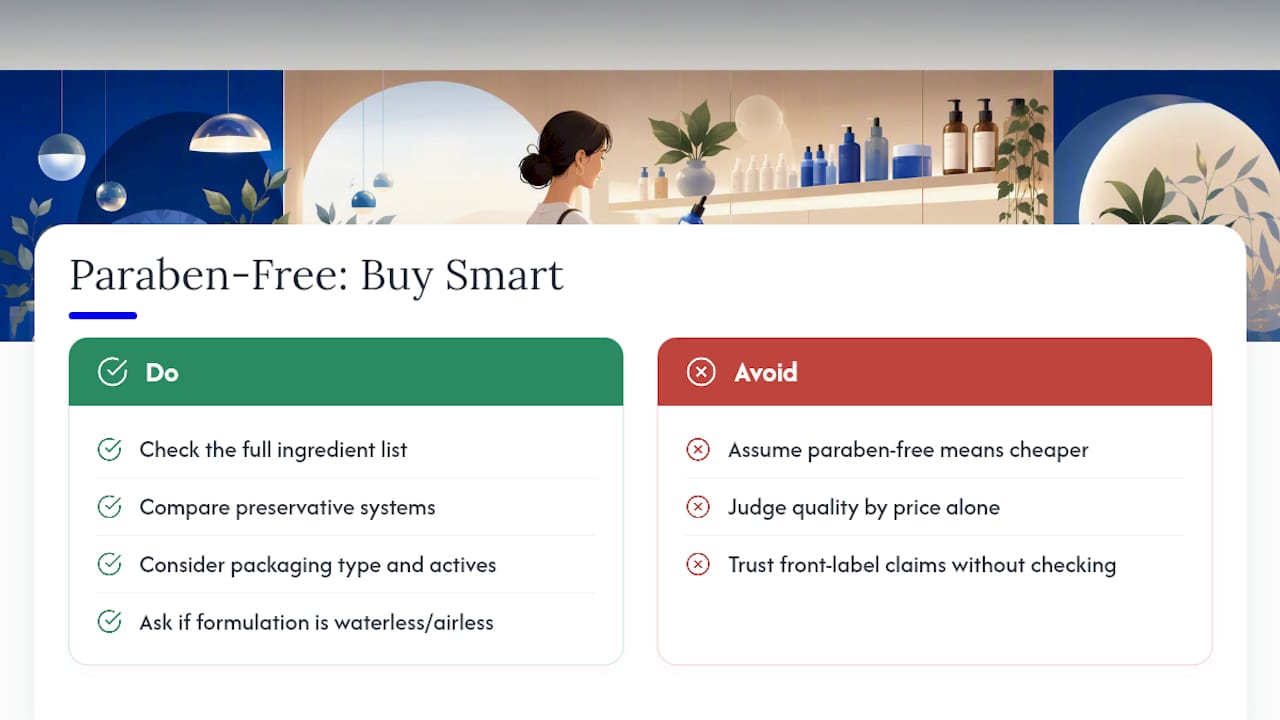
The more useful cost question isn’t “does paraben-free cost more,” but “am I paying for the right upgrade.” A $12 paraben-free cleanser and a $45 paraben-free cleanser might use nearly identical preservative systems, with the price gap coming from packaging, marketing, or added actives rather than any meaningful safety difference. Reading the full ingredient list rather than the price tag or front-label claim remains the most reliable way to judge whether you’re actually getting something different for the money.
Which Brands and Certifications Signal Real Paraben-Free Standards?
No single regulatory body certifies “paraben-free” the way organizations certify organic food or fair-trade goods, which means the term itself carries no enforced standard. That gap is exactly why ingredient-list verification matters more than badge-spotting.
That said, a few certification types add genuine credibility when they appear alongside a paraben-free claim. Leaping Bunny and similar cruelty-free certifications confirm animal-testing practices, not preservative content, but brands that pursue that level of third-party verification tend to be more transparent about formulation generally. Vegan and gluten-free certifications work the same way: they don’t speak directly to parabens, but they reflect a brand culture built around ingredient transparency.
Splendoraskincare formulates its lineup, including the Organic Skin Tag Removal Serum, around cruelty-free, vegan, and gluten-free standards with clean, hand-harvested ingredients, which puts the brand in that transparency-first category shoppers should be looking for.
The most trustworthy signal, regardless of brand size or certification count, is still the ingredient panel itself. A brand that lists full ingredients clearly, avoids vague terms like “fragrance blend” without disclosure, and keeps formulas reasonably short is giving you more useful information than any single certification logo can.
Do Paraben-Free Products Actually Work as Well as Regular Ones?
Efficacy comes down to the active ingredients doing the work, not the absence of a preservative family. Parabens don’t hydrate, brighten, or firm skin. They stop microbial growth. Removing them changes nothing about how well a vitamin C serum brightens or how effectively a hyaluronic acid formula hydrates, provided the rest of the formulation stayed intact.
Where consumer reviews sometimes diverge is shelf stability and texture. Products reformulated with certain natural preservative systems occasionally have shorter effective shelf lives or slightly different textures than their paraben-containing predecessors, which shows up in reviews as complaints about a product “going bad faster” or “feeling different” after a reformulation. That’s a formulation-chemistry issue, not evidence that paraben-free products underperform as a category.
The more meaningful comparison isn’t paraben-free versus regular. It’s whether a specific formula, regardless of preservative choice, contains active ingredients at concentrations proven to do what the label promises. A well-formulated paraben-free serum with retinol or peptides at effective concentrations will outperform a poorly formulated conventional one every time. Preservative choice sits several steps down the list of what actually determines whether a product delivers results.
The Gap Between Paraben Fear and Paraben Fact
Most of the conventional wisdom on this topic treats parabens as a binary safety switch: contains them, avoid; doesn’t, buy freely. That framing gets the risk hierarchy backward. The FDA’s own position and the 2020 expert panel review both point toward parabens being one of the more thoroughly studied and comparatively low-concern preservative classes on the market, not one of the more dangerous ones.
What deserves more attention than it gets is the replacement conversation. Isothiazolinones causing more allergic reactions than the ingredients they replaced is a genuinely underreported nuance, and it’s the detail most “clean beauty” content skips entirely.
If you’re choosing paraben-free skincare, the smartest move isn’t chasing the absence of one ingredient family. It’s reading the full label, prioritizing fragrance-free and barrier-supporting formulas, and treating a serum like Smooth Skin Serum as a research-informed choice rather than a fear-based one.
— Cyril
Build a Simple Paraben-Free Routine With Splendoraskincare
If you’ve read this far, you already know that “paraben-free” only means something when the rest of the formula holds up, and that’s exactly where Splendoraskincare’s approach differs from a lot of shelf-filler clean-beauty lines: short ingredient lists, hand-harvested ingredients, and no artificial additives padding out the label.
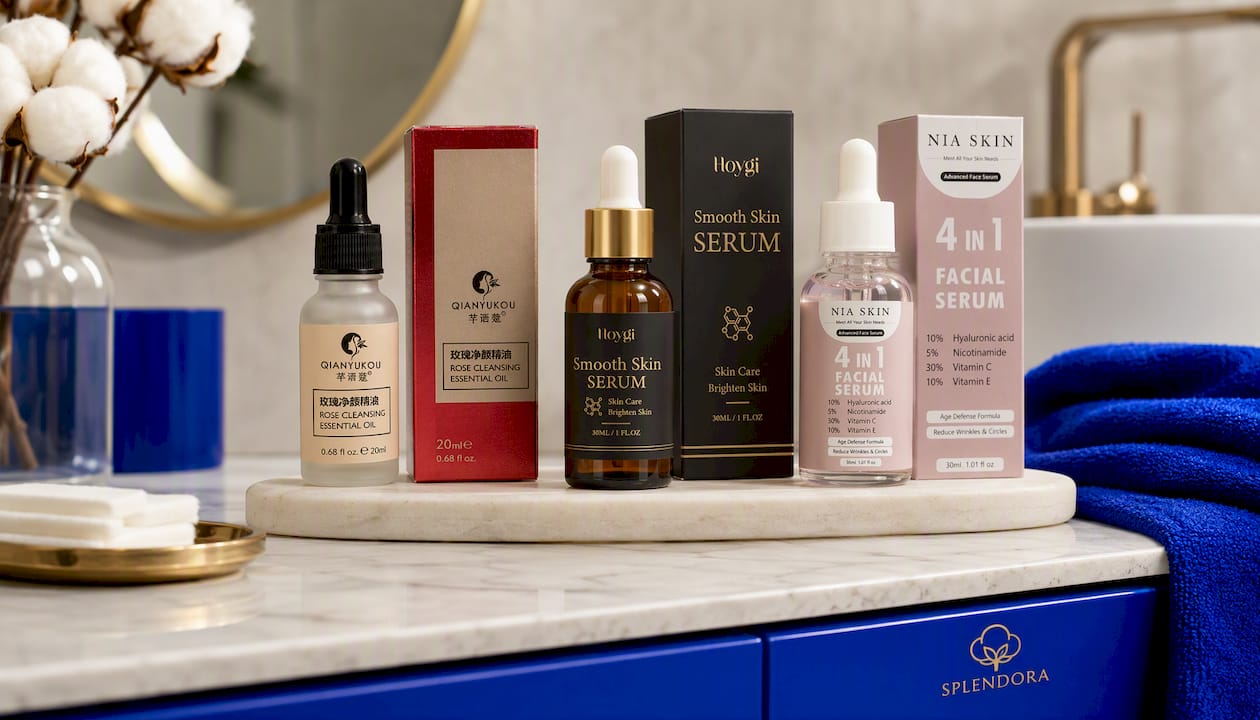
Three products cover most routines. Organic Skin Tag Removal Serum targets skin tags and rough texture directly, working well as a spot treatment rather than an all-over step. Smooth Skin Serum fits the daily treat step for texture refinement, layering under moisturizer once skin is clean. Skincare Anti-Aging Anti-Wrinkle Whitening Facial Serum handles fine lines and uneven tone, best applied after the other two once your skin has adjusted to a new step.
A minimal routine looks like: cleanse, treat with your chosen serum, then protect with moisturizer and sunscreen. Follow the single-category trial method from earlier, starting with one serum for two to three weeks before adding the next. Browse the full lineup at Splendoraskincare and start with whichever concern matters most to you right now.
Sources
- Parabens in Cosmetics | FDA
- Amended Safety Assessment of Parabens as Used in Cosmetics (2020)
- Assessment of the toxic effects of parabens and their by-products on human skin and endothelial cells
- Allergic contact dermatitis: isothiazolinone sensitization (example review)