

Double Cleansing Routine: Start 3–4 Nights with Splendoraskincare Pair
Double cleansing works best for people who wear makeup, sunscreen, or both, and for many dealing with oily or congested skin. The method is two steps: an oil-based cleanser first to lift makeup and sunscreen, then a water-based cleanser to clear whatever’s left and clean the skin itself. If your skin runs very dry or you deal with eczema, proceed carefully. The technique and product pairings that make this work follow below.
TL;DR:
- Double cleansing is most beneficial for wearers of makeup and sunscreen, especially those with oily or congested skin, but should be approached carefully for dry or eczema-prone skin.
- Using a gentle, soap-free, syndet-based formula for both steps minimizes barrier damage and enhances hydration, as confirmed by recent hydration-focused studies.
- Perform each step with 30 to 60 seconds of gentle massage using lukewarm water, and avoid hot water or abrasive tools around sensitive areas like the eyes.
- Limit double cleansing to night-time routines on days when makeup or SPF accumulate, and avoid overdoing it to prevent tightness, flaking, or increased redness.
- Choose skin-appropriate formulas: gels or foams with actives like salicylic acid for oily skin, rich oils or creams with ceramides for dry skin, and mild balms or oils for normal or combination skin.
Table of Contents
- What Is a Double Cleansing Routine and Why Two Cleansers?
- What Are the Real Benefits of Double Cleansing?
- How Do You Double Cleanse Step by Step?
- How Do You Choose the Right Cleansers for Your Skin Type?
- How Often Should You Double Cleanse, and What Mistakes Ruin It?
- How Splendoraskincare Fits Into a Gentle Double Cleanse
- Where Conventional Double Cleansing Advice Falls Short
- Where to Start With a Splendoraskincare Cleansing Pair
- Sources
- FAQ
What Is a Double Cleansing Routine and Why Two Cleansers?
An oil-based cleanser (balm, oil, or micellar water) dissolves makeup, sunscreen, and the sebum that clings to your skin like it’s magnetized. A water-based cleanser then removes sweat, dirt, and whatever oily residue is left behind, along with cleaning the skin surface itself. Neither step does the other’s job well on its own, which is the entire reason the method exists.
The chemistry behind it is emulsification: oil cleansers contain emulsifiers that turn into a milky texture when mixed with water, letting rinse water carry both product and grime away instead of leaving a film. Emulsifying oil cleansers also means less scrubbing, since the product does the lifting rather than your hands.
Modern formulas favor syndets (synthetic detergents) over old-fashioned bar soap. Research on surfactants and the skin barrier shows that harsh surfactants penetrate too deep into the stratum corneum, the skin’s outer protective layer, and strip lipids you actually need.
- Oil-based step: dissolves makeup, SPF, and sebum through emulsification.
- Water-based step: clears sweat, debris, and leftover residue, and cleans the skin.
- Syndet formulas clean effectively without the harsh, over-stripped feeling of traditional soap.
What Are the Real Benefits of Double Cleansing?
Cleaner pores, better absorption of serums and moisturizers, and a face that’s actually free of waterproof mascara and long-wear SPF: those are the practical payoffs. Cleveland Clinic’s overview of the method confirms it works best for people who wear makeup or sunscreen daily, since a single cleanse often leaves a filmy residue you can feel by the end of the day.
Oily or congested skin tends to benefit too, since a single water-based wash rarely breaks down the oil-based grime sitting on top of sebum. But not every dermatologist is sold on doing this nightly for everyone. Some warn it can dry out skin that’s already compromised, so the formulas you choose matter as much as the steps themselves.
That caution is backed by actual data. A 2025 interventional study on a soap-free cleansing lotion found that after 30 days of use, participants saw measurable improvements in hydration and barrier function, with zero reported adverse events. That’s the strongest argument yet for choosing soap-free, gentle formulas over harsh foaming cleansers for either step.
How Do You Double Cleanse Step by Step?
Technique matters more than most people assume. Rushing through 10 seconds of face-rubbing defeats the purpose, and so does scalding your skin under hot water because it “feels cleaner.”
- Apply an oil, balm, or micellar formula to completely dry skin. Water-repelled oils actually work more efficiently on a dry face than a damp one.
- Massage for 30 to 60 seconds, working in small circles across the forehead, cheeks, nose, and chin. This is when emulsification happens: the product turns milky as it mixes with the oils on your skin.
- Add a splash of lukewarm water to emulsify fully, then rinse. Dermatology guidance is consistent on water temperature: hot water strips lipids you need, so lukewarm is the standard here and for step two.
- With skin still slightly damp, apply a gentle water-based cleanser. The AAD recommends using fingertips rather than washcloths or scrub brushes, since abrasive tools cause micro-tears you won’t notice until your skin starts reacting.
- Massage for another 30 to 60 seconds, then rinse with lukewarm water and pat dry with a clean towel. Don’t rub.
For eye makeup, especially waterproof mascara, let the oil cleanser sit on closed lids for a few extra seconds before wiping gently outward. Skip harsh scrubs or textured cloths near the eye area entirely.
Double cleansing belongs mainly at night, when makeup and SPF have accumulated all day. Morning skin usually just needs one gentle cleanse, if that.
Pro Tip: Try double cleansing three or four nights a week first, not every single night. Watch how your skin responds. Tightness, flaking, or new redness within a few days means you’re overdoing it, and it’s time to dial back to one cleanse or switch to milder formulas.
How Do You Choose the Right Cleansers for Your Skin Type?
The steps stay the same across skin types. What goes into the bottle is where the real decisions happen.
Oily and acne-prone skin does well with non-comedogenic gel or foam cleansers for the second step, sometimes with salicylic acid or benzoyl peroxide worked in to address breakouts directly. If oil cleansers tend to trigger clogged pores for you, micellar water works as a first-step substitute that lifts makeup without leaving an oily film behind.
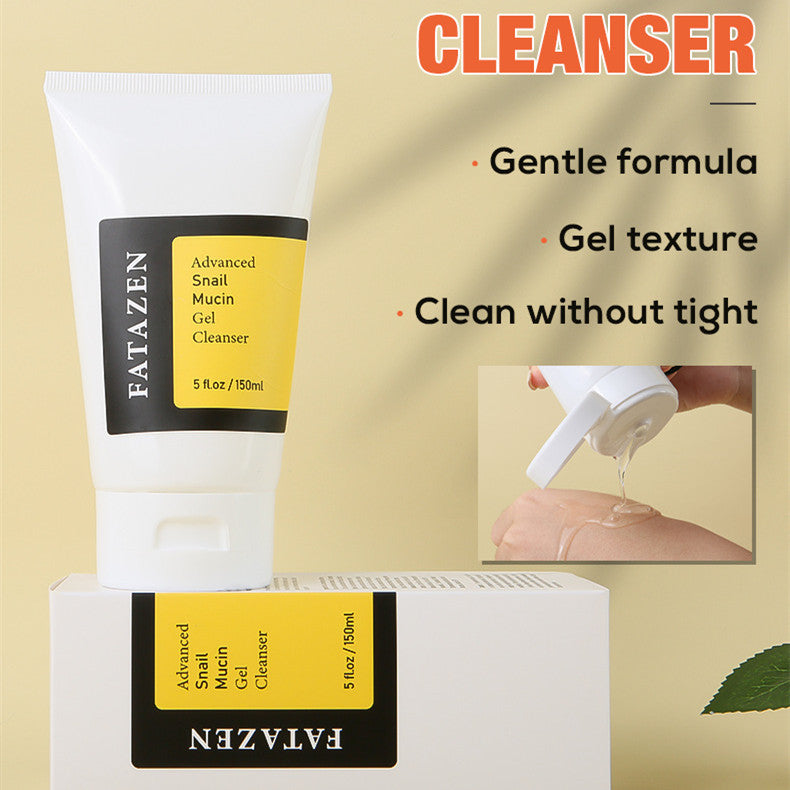
Dry, sensitive, or mature skin benefits from a richer oil or balm first, followed by a cream or milk cleanser rather than anything foaming. Look for ceramides, hyaluronic acid, and squalane on the label. Ingredient-focused guidance from The Strategist points to skipping sulfates and added fragrance, both known irritants for reactive skin.
Combination or normal skin has more flexibility. A lightweight oil or balm first step, followed by a gentle gel or cream second step, usually balances things out without over-drying the T-zone or under-cleaning the cheeks.
- Oily/acne-prone: non-comedogenic gel or foam, salicylic acid or benzoyl peroxide as needed, micellar water as an oil-cleanser alternative.
- Dry/sensitive/mature: nourishing oil or balm, then cream or milk; ceramides, hyaluronic acid, squalane; avoid sulfates and fragrance.
- Combination/normal: lightweight oil or balm, then a balanced gel or cream cleanser.
How Often Should You Double Cleanse, and What Mistakes Ruin It?
Twice a day is the outer limit dermatologists recommend for cleansing overall, and that includes double cleansing. Guidance on protecting the skin barrier is blunt about it: more washing does not mean more clean, and hot water on top of frequent washing is what actually causes damage.
The smarter default is to double cleanse at night when you’ve worn makeup or heavy sunscreen, and stick to a single gentle wash in the morning. On days with no makeup and mineral sunscreen only, one cleanse at night is often enough.
Watch for these signs you’re overdoing it:
- Skin feels tight or “squeaky” right after washing, which actually signals lipid loss, not cleanliness.
- Flaking or rough patches appear where there weren’t any before.
- Redness or a stinging sensation shows up when you apply serum or moisturizer afterward.
If you spot any of these, drop back to one cleanse a day for a week and lean on a fragrance-free moisturizer to help repair the barrier before reintroducing the second step.
How Splendoraskincare Fits Into a Gentle Double Cleanse
A workable nightly pairing looks like this: start with the Deep Cleansing Makeup Remover Hydrating and Skin Rejuvenating Foam Facial Cleanser to break down makeup and SPF, then follow with the Golden Moisturizing Cleanser to clean and hydrate at the same time. Both are formulated with clean, vegan, gluten-free ingredients and no artificial additives, which matters given how much a first-step formula sits on your skin during that 30 to 60 second massage.
For a routine that carries the technique through every remaining step, toner, serum, eye cream, and moisturizer, the 5-Step Routine keeps things simple without stacking five different brands’ worth of guesswork onto your face.
Where Conventional Double Cleansing Advice Falls Short
Most articles on this topic treat double cleansing like a universal rule: do it every night, no exceptions. That’s not what the evidence actually supports. Cleveland Clinic’s own guidance flags that the method can be unnecessary or drying for plenty of people, and the dermatology consensus on frequency, twice daily at most, applies just as firmly to double cleansing as it does to any other washing routine.
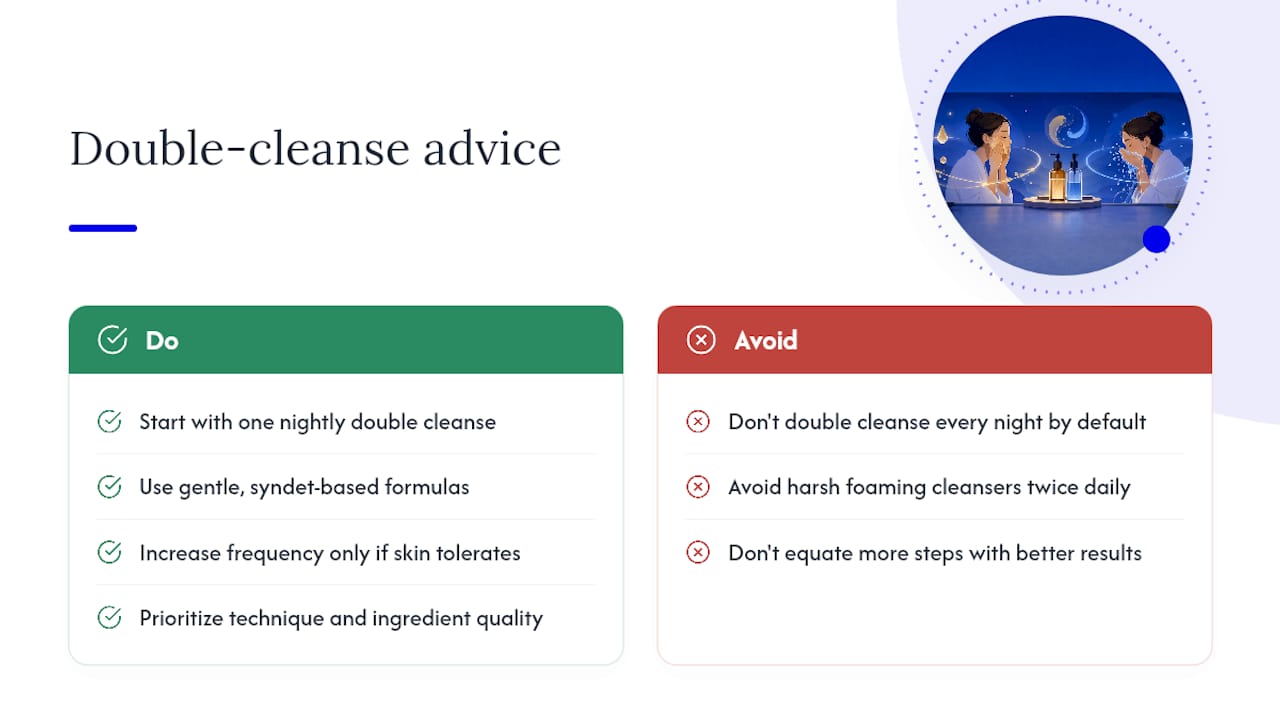
The bigger blind spot is formula choice. People obsess over the number of steps and ignore what’s actually in the bottle. A harsh foaming cleanser used twice, morning and night, does more barrier damage than a single gentle, soap-free wash. The 2025 study on soap-free cleansing lotions makes that case with real hydration data, not just marketing language.
My honest read: start with one nightly double cleanse using gentle, syndet-based formulas, and only add frequency if your skin tolerates it without tightness or flaking. Technique and ingredient quality matter more than sticking rigidly to a two-step ritual every single day.
— Cyril
Where to Start With a Splendoraskincare Cleansing Pair
An alternative to guesswork shopping for a double cleanse routine is to choose clean, vegan, gluten-free formulas made without artificial additives, providing a simple approach without needing to cross-reference multiple brands to build a routine that suits your skin.

If you just need the two pieces to start tonight, pair the Deep Cleansing Makeup Remover Foam Facial Cleanser as your oil-step alternative with the Golden Moisturizing Cleanser as your water-based step, a combination built for hydration rather than stripping. Prefer a routine already mapped out step by step? The 5-Step Routine bundle covers cleanser, toner, serum, eye cream, and moisturizer in one purchase, ideal if you’d rather not piece together five separate products from five separate brands. Browse the full cleanser collection or the complete product catalog to build the pairing that fits your skin type tonight.
Sources
- Damaged skin barrier — The Well by Northwell
- Clinical study on soap-free cleansing lotion — PubMed (2025)
- Double cleansing explained — Cleveland Clinic
- Face washing 101 — American Academy of Dermatology (AAD)
FAQ
What Is Double Cleansing, Exactly?
Double cleansing means washing your face twice with two different cleanser types: an oil-based formula first, then a water-based one. Cleveland Clinic describes it as most useful for people who wear makeup or sunscreen regularly.
Is Double Cleansing Bad for Sensitive Skin?
It can be, if you use harsh, foaming, or fragrance-heavy formulas. Sensitive skin does better with a nourishing oil or balm first, followed by a soap-free, ceramide-rich cream cleanser like the Golden Moisturizing Cleanser.
Should I Double Cleanse in the Morning Too?
Generally, no. Morning skin hasn’t accumulated makeup or sunscreen residue overnight, so one gentle cleanse is usually enough. Save double cleansing for nights when you’ve worn makeup or heavy SPF.
How Long Should I Massage Each Cleansing Step?
Roughly 30 to 60 seconds per step gives the oil cleanser time to emulsify and the water-based cleanser time to work without over-scrubbing your skin.
What Does Splendoraskincare Cost for a Starter Cleansing Pair?
Current prices for individual products and the 5-Step Routine bundle are listed directly on the Splendoraskincare site, where you can compare the cleanser pair against the full routine bundle.