

4 Step Test to Diagnose Dehydrated vs Dry Skin and Treat It
Dry skin means your face doesn’t produce enough oil; dehydrated skin means it’s lost water. If you’ve had rough, flaky patches for years, you need richer, lipid-based products. If your skin suddenly looks dull and tight after a flight or a hot shower, you need water-binding ingredients sealed in with a moisturizer. Treating one problem with the other’s fix rarely works, and often makes things feel worse before they get better.
TL;DR:
- Dehydrated skin can affect oily and combination skin types, making water-binding ingredients more effective than lipid-based products in such cases.
- The pinch test helps distinguish between dry and dehydrated skin: slow rebound indicates dehydration, while persistent flaking points to actual dryness.
- Humectants like hyaluronic acid draw water into the skin and should be applied to damp skin for best results, followed by occlusives to seal in moisture.
- Chronic dry skin shows signs like flaking, roughness, and visible cracks, often caused by genetics, aging, or harsh skincare, and requires richer, lipid-based products.
- Short-term dehydration is often triggered by hot showers, low humidity, alcohol, caffeine, or over-exfoliation, and can usually be alleviated with targeted skincare routines.
Table of Contents
- Dehydrated vs Dry Skin: What Actually Separates Them
- What Does Dehydrated Skin Look Like?
- Is My Skin Dry or Dehydrated? Try This Test
- Humectants, Emollients, and Occlusives: What to Use for Each
- Building a Dehydrated Skin Routine vs. a Dry Skin Routine
- When It’s Time to See a Dermatologist
- Diagnose First, Then Treat: A Practical Take
- Splendoraskincare Products Matched to Your Skin Condition
- Sources
- FAQ
Dehydrated vs Dry Skin: What Actually Separates Them
Dry skin is a skin type. It’s caused by low sebum production or a compromised barrier, and it doesn’t go away on its own. Dehydrated skin, by contrast, is a temporary condition tied to water loss in the outer layer, and it can show up on oily, combination, or dry skin alike. That last part surprises people: oily skin can still be dehydrated, because oil production and water content are controlled by different mechanisms entirely.
Common causes of true dry skin include:
- Genetics and naturally low sebum output
- Aging, which slows oil gland activity over time
- Harsh cleansers or over-washing that strip natural lipids
- Low humidity environments and cold weather
- Underlying conditions like eczema, psoriasis, or thyroid issues
The signs are usually persistent: flaking that returns week after week, a rough or sandpapery texture you can feel with your fingertips, and sometimes visible cracks on the hands, heels, or knuckles. This scaling texture is one of the clearest tells that separates dry skin from dehydration, which tends to look different on the surface even when it feels similarly uncomfortable.
What Does Dehydrated Skin Look Like?
Dehydrated skin shows up fast and fades fast, once you address it. It’s a shortage of water in the stratum corneum, the skin’s outermost layer, and it reacts strongly to your environment and habits rather than your genetics.
Typical triggers include:
- Long, hot showers that strip moisture from the skin’s surface
- Low indoor humidity, especially from heating or air conditioning
- Air travel, which dries out cabin air dramatically
- Alcohol and caffeine, both mild diuretics
- Over-exfoliation, which damages the barrier that normally holds water in
Environmental and behavioral triggers like these are the leading cause of transient dehydration, distinct from the age and sebum-related factors behind chronic dry skin. The signs are visual before they’re textural: dullness, a grayish cast, and fine lines that look more pronounced when you smile, even if your T-zone is still shiny. That combination of surface oil and visible fine lines is a strong signal of dehydration rather than true dryness.
Is My Skin Dry or Dehydrated? Try This Test
The fastest way to check is the pinch test. Pinch a small section of skin on your cheek or the back of your hand, hold for a second, and release.
- Watch the rebound speed. Skin that snaps back quickly is generally well hydrated; skin that stays creased or wrinkled for a moment suggests a water deficit.
- Check the timing. A condition that’s been with you for months or years, especially through different seasons, points to dry skin. Something that appeared this week after a flight or a string of hot showers is almost always dehydration.
- Look at texture versus tone. Flaking and roughness lean dry. Dullness, tightness, and grayish tone lean dehydrated.
- Consider both at once. It’s entirely possible to have dry skin that’s also dehydrated, especially in winter. If you have chronic flaking plus sudden tightness, treat the water deficit first with humectants, then layer in richer oils for the ongoing dryness.
Pro Tip: Run the pinch test on the back of your hand first thing in the morning before you’ve applied anything. It gives you a cleaner baseline than testing your face after cleanser or makeup residue.
Home tests like this are useful but not exact. Clinics use tools like a corneometer for objective hydration measurement, so if your results stay ambiguous or symptoms persist, a professional reading is worth getting.
Humectants, Emollients, and Occlusives: What to Use for Each
Ingredient choice is where most people go wrong, and it’s the single biggest lever for fixing either problem correctly. Dermatologists point out that a common mistake is applying heavy oils to dehydrated skin, which feels greasy without ever addressing the water shortage underneath, while using only lightweight humectants on dry skin leaves the barrier exposed.
Three ingredient categories do three different jobs:
- Humectants (hyaluronic acid, glycerin) pull water into the skin from the air and deeper layers. They work best applied to damp skin and need to be sealed with a moisturizer or oil right after, or the water they draw in can evaporate straight back out.
- Emollients (plant oils, squalane, shea butter) soften skin and partially fill gaps in a damaged barrier.
- Occlusives (petrolatum, dense butters) form a physical seal on top of everything, locking moisture in and blocking further water loss.
For dry skin, you want emollients and occlusives doing the heavy lifting, since the actual lipid supply is what’s missing. For dehydrated skin, humectants come first, followed immediately by something occlusive enough to trap that water before it disappears. A moisturizing peptide serum applied under a heavier cream follows exactly this logic.
Ceramides deserve a special mention. They rebuild the lipid matrix that holds skin cells together, which reduces water loss regardless of whether your root problem is oil or hydration, making them one of the few ingredients that genuinely help both conditions at once.
One more habit worth breaking: aggressive exfoliation. Scrubbing away dead skin cells might feel productive, but it strips the very barrier you’re trying to repair, whichever condition you’re dealing with. Swap a harsh scrub for a gentle hydrating cleanser while your skin recovers.
Building a Dehydrated Skin Routine vs. a Dry Skin Routine
Mornings and evenings call for slightly different priorities depending on which condition you’re managing.
- Dehydrated skin, morning: Cleanse gently, apply a hyaluronic acid serum to still-damp skin, seal with a lightweight lotion, then finish with broad-spectrum sunscreen.
- Dry skin, morning: Use a creamier cleanser, follow with a richer moisturizer that contains ceramides or plant oils, then apply sunscreen over top once it’s absorbed.
- Dehydrated skin, evening: Apply humectants to damp skin right after cleansing, then layer a moisturizer or facial oil before bed to lock everything in overnight.
- Dry skin, evening: Skip humectant-only products and go straight to a nourishing, barrier-repairing moisturizer or overnight mask.
- Short-term fixes for dehydration: Run a humidifier while you sleep, shorten hot showers, and always apply products to damp rather than towel-dried skin.
When It’s Time to See a Dermatologist
Most dry and dehydrated skin responds to a smarter routine within a couple of weeks. See a clinician if you notice bleeding fissures, spreading redness or inflammation, signs of infection, or eczema that won’t calm down with over-the-counter care. A dermatologist can prescribe barrier-restoring treatments and check for systemic causes, like thyroid issues, that at-home changes can’t fix. For readers who want clinician-informed treatment steps before booking an appointment, this clinic breakdown of dehydration treatment is a useful starting point.
Diagnose First, Then Treat: A Practical Take
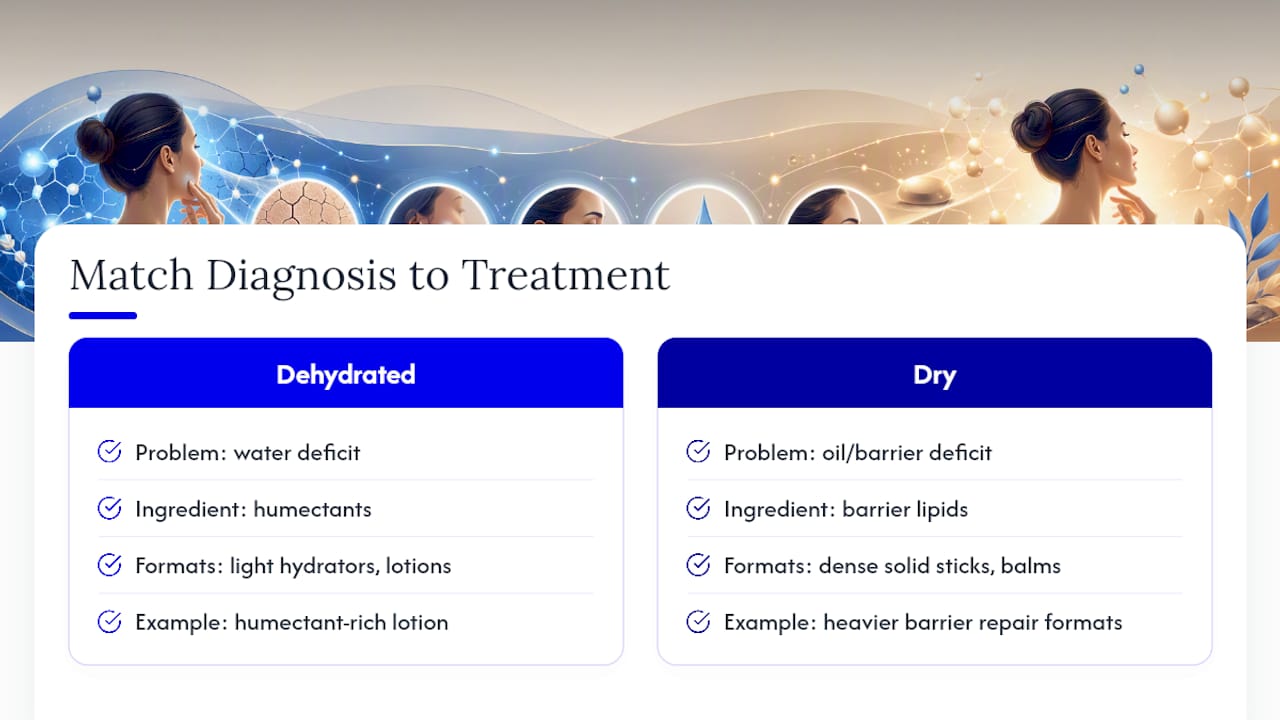
Most skincare frustration comes from skipping the diagnosis and jumping straight to product shopping. If you don’t know whether you’re fighting an oil deficit or a water deficit, you’ll keep buying products that fix the wrong problem, then conclude “nothing works for my skin.” It usually isn’t that nothing works. It’s that the wrong ingredient class was doing the job.
Matching ingredient to need is genuinely more important than chasing trendy formulas. A humectant-rich lotion solves a different problem than a dense solid stick, and neither is inherently better; they’re built for different jobs. That’s the whole philosophy behind stocking both light hydrators and heavier barrier repair formats instead of one-size-fits-all creams.
— Cyril
Splendoraskincare Products Matched to Your Skin Condition
Once you know which problem you’re solving, picking the product gets simple. If your skin feels tight, dull, or crepey after a hot shower or a flight, the Facial Skin Moisturizing Lotion for Delicate Skin is built for exactly that: lightweight hydration you can layer daily without weighing down the skin.
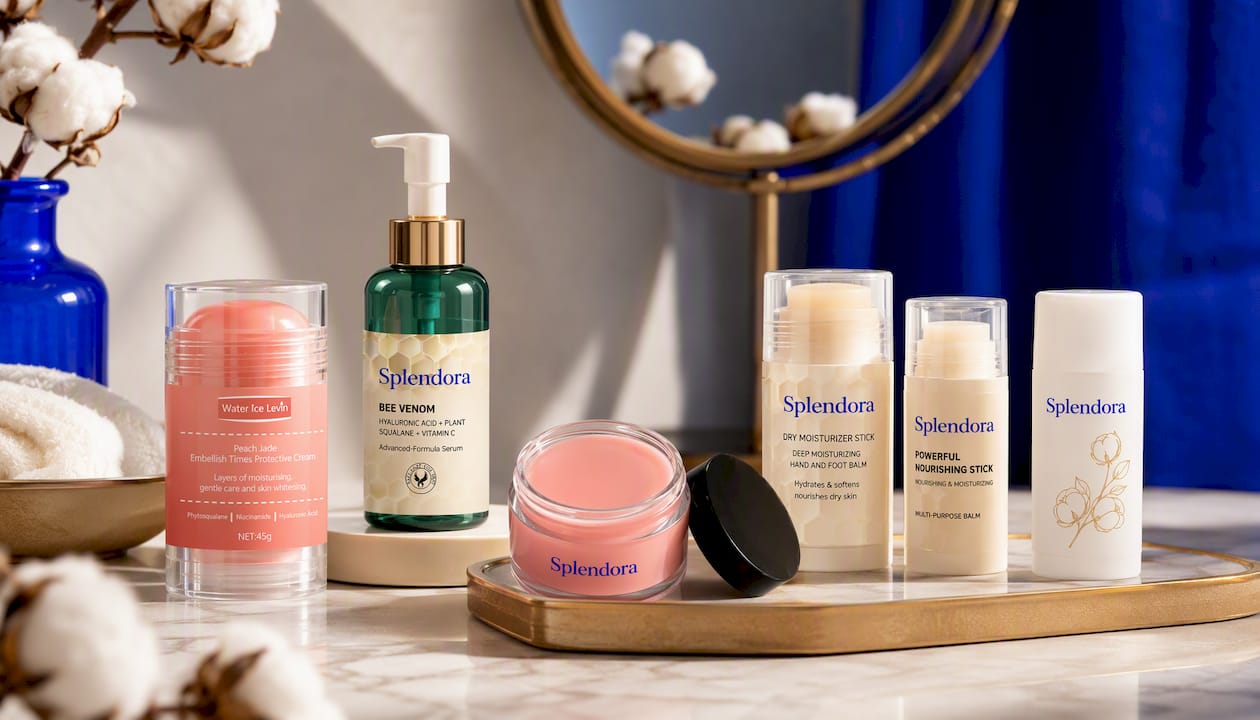
Persistent flaking on your hands, elbows, or feet needs a different tool entirely. The Moisturizer Solid Stick is formulated as a deep moisturizing balm you can swipe on rough patches without the mess of a jar, making it a practical fix for cracked heels or knuckles that crack in cold weather. Cracked or peeling lips get their own category too: the moisturizing lip balm is sized to toss in a bag and use throughout the day, especially useful during travel or heating season when lips dry out fastest.
All three are cruelty-free, vegan, and made without artificial additives, so you’re not choosing between clean ingredients and results that hold up. Start with whichever product matches your current symptom, use it consistently for a couple of weeks, and add a second one if your skin turns out to be dealing with both dryness and dehydration at once. Browse the full Splendoraskincare lineup to build out a routine that fits what your skin actually needs right now.
Sources
- Dry skin vs. dehydrated skin — The Well by Northwell
- How to tell if your skin is dry or dehydrated — Good Housekeeping
- Dehydrated vs. dry skin: Differences and more — Medical News Today
- Dry vs. Dehydrated Skin: Treatments and How To Tell the Difference — Healthline
- Dry skin: Symptoms and causes — Mayo Clinic
FAQ
How do I know if my skin needs hydration vs. moisture?
If your skin feels tight and looks dull but isn’t flaking, it needs hydration (water) from humectants like hyaluronic acid. If it’s flaking or rough regardless of season, it needs moisture (lipids) from richer emollients or occlusives.
What does skin look like if it’s dehydrated?
Dehydrated skin often looks dull, slightly grayish, and shows fine crepey lines that become more visible when you smile, even if the surface still looks oily in places.
Can your skin be both dry and dehydrated?
Yes. A skin type that’s naturally low in oil can also lose water due to weather, travel, or over-exfoliation, so you may need humectants and richer lipids at the same time.
What’s the quickest way to test dry vs. dehydrated skin at home?
Use the pinch test: pinch skin on your cheek or hand and watch how fast it bounces back; slow rebound points to dehydration, while persistent flaking regardless of the test points to dry skin.
Which Splendoraskincare product works best for dehydrated skin?
The Facial Skin Moisturizing Lotion for Delicate Skin is formulated for lightweight, daily hydration, making it a practical starting point for skin that feels tight or looks dull rather than flaky.