

Sensitive Skin: Bakuchiol vs Retinol in a 12 Week Trial
If your skin is sensitive, reactive, or prone to redness, bakuchiol is the safer starting point. If you can tolerate a break-in period and want the most well-documented anti-aging active on the market, retinol still wins. A 12-week randomized, double-blind trial found the two performed comparably on wrinkles and pigmentation, with retinol causing noticeably more scaling and stinging. Patch test either one before you commit to nightly use.
TL;DR:
- Retinol causes more skin dryness, peeling, and stinging than bakuchiol, especially during the initial weeks of use, but it generally produces faster results.
- The 2018 trial found bakuchiol and retinol equally effective at reducing wrinkles and pigmentation after 12 weeks, with bakuchiol better tolerated.
- Sensitive, eczema-prone, or rosacea-affected skin should start with bakuchiol to avoid irritation, while retinol is better suited for rapid correction of severe photodamage.
- Both ingredients require gradual introduction; retinol should be applied slowly to prevent barrier damage, while bakuchiol can be used twice daily without significant irritation.
- Consistent use over time is more critical for results than the potency of the ingredient, making regular application and patience key in skincare routines.
Table of Contents
- What Is Retinol and How Does It Work?
- What Is Bakuchiol and How Does It Compare to Retinol?
- Does Bakuchiol Work as Well as Retinol?
- Who Should Use Retinol, and Who Should Choose Bakuchiol?
- How Do You Introduce Retinol or Bakuchiol Without Wrecking Your Skin Barrier?
- How Splendoraskincare Approaches Tolerable Retinol
- Your Quick Decision Checklist
- Try Splendoraskincare’s Retinol Smoothing Toner
- Editorial Take: The Bakuchiol vs. Retinol Debate Misses the Real Question
- Sources
What Is Retinol and How Does It Work?
Retinol is a vitamin A derivative that your skin converts into retinoic acid, the active form that actually does the work. Once converted, it speeds up cell turnover, stimulates collagen production, and helps even out pigmentation over time. It has decades of clinical backing behind it, and prescription-strength versions like tretinoin remain the standard of care for serious photoaging.
That track record comes with a cost. Retinol is notorious for:
- Dryness and flaking, especially in the first few weeks
- Stinging or a burning sensation right after application
- Increased sensitivity to sun, which raises burn risk without daily SPF
- A temporary “purge” period, often called the retinization phase
Most people adapt within three to four weeks if they ramp up frequency gradually. Skin that struggles with eczema or rosacea often needs longer, or a different plan entirely.
What Is Bakuchiol and How Does It Compare to Retinol?
Bakuchiol is a plant-derived compound extracted from the seeds and leaves of Psoralea corylifolia, a plant used for centuries in Ayurvedic and Chinese medicine. Chemically, it is nothing like vitamin A. It’s a meroterpene phenol, but it influences some of the same downstream gene activity that retinoids trigger, which is likely why it produces retinol-like results without retinol’s chemical structure, according to a mechanistic review of bakuchiol.
What the evidence shows so far:
- Small clinical trials link it to visible improvement in fine lines and uneven tone
- It carries antioxidant and anti-inflammatory properties on top of its anti-aging effects
- Tolerability tends to run higher than retinol’s, even at twice-daily use
- The research base is thinner. Fewer trials, smaller sample sizes, and less long-term safety data than retinoids that have been studied since the 1970s
Bakuchiol meaning “gentler alternative” isn’t hype. It’s a reasonable summary of where the current evidence actually sits.
Does Bakuchiol Work as Well as Retinol?
The most cited comparison comes from a 2018 randomized, double-blind trial that put both ingredients through a genuine head-to-head test. Forty-four participants used either 0.5% bakuchiol twice daily or 0.5% retinol once daily for 12 weeks.
Trial snapshot: Both groups saw reductions in wrinkle surface area and hyperpigmentation, with no significant difference in efficacy between the two ingredients. The retinol group reported more scaling and skin stinging.
That’s a striking result for a trial this small; a botanical extract matched a gold-standard active on measurable outcomes. It lines up with findings from a separate British Journal of Dermatology review, which concluded bakuchiol improves photoaging markers and tends to be better tolerated, though it flagged the same limitation: the comparative evidence base is still small next to decades of retinoid research.
A few things worth keeping in mind before you treat “comparable efficacy” as settled science:
- Forty-four participants is a modest sample. It’s enough to detect a real effect, not enough to rule out smaller differences that a larger study might catch.
- Twelve weeks captures short-term results. Neither ingredient’s long-term trajectory beyond that window has been studied side by side.
- “No significant difference” means the trial didn’t detect one, not that the two are proven identical. Confidence grows with more trials, and bakuchiol has fewer of them.
Dermatologists sometimes describe retinol as the power tool and bakuchiol as the manual one: both get the job done, but one asks more of your skin along the way.
Who Should Use Retinol, and Who Should Choose Bakuchiol?
Your skin type and life stage matter more than which ingredient has the longer research history.
- Sensitive, eczema-prone, or rosacea-prone skin: Start with bakuchiol. Its anti-inflammatory profile makes it a more comfortable entry point, and you can layer in low-dose retinol later if you want stronger results.
- Pregnant or breastfeeding: Vitamin A derivatives, including retinol, are generally avoided during pregnancy. Bakuchiol has a thinner evidence base for this population too, so talk to your doctor before adding either one to your routine.
- Severe photodamage or active acne needing fast correction: Retinoids, including prescription tretinoin, remain the standard of care here. Tretinoin’s clinical guidance confirms it works faster and harder than OTC options, with a correspondingly stronger irritation profile that needs medical oversight.
If none of those apply to you, the decision often comes down to patience. Retinol usually shows results a little faster once your skin adjusts; bakuchiol asks for less adjustment but sometimes a bit more time.
How Do You Introduce Retinol or Bakuchiol Without Wrecking Your Skin Barrier?
Rushing either ingredient is the single most common reason people quit before seeing results.
- Start retinol slow. Apply two or three nights a week for the first two weeks, then build toward nightly use as tolerance improves.
- Use the retinol sandwich. Moisturizer, then retinol, then another layer of moisturizer. This technique cuts down on peeling and water loss without diluting the active’s effect.
- Apply bakuchiol twice daily. Morning and night both work, and it pairs well with vitamin C, niacinamide, and most other antioxidants without the layering restrictions retinol demands.
- Never skip sunscreen. Both ingredients call for daily SPF, though retinol’s photosensitivity risk makes this non-negotiable rather than optional.
- Pause if you see raw, cracked, or persistently inflamed skin. That’s your cue to back off frequency or see a dermatologist rather than push through.
Pro Tip: If your skin stings within seconds of applying retinol, you’re likely using too much or applying it to damp skin. Wait a full 20 to 30 minutes after cleansing so your skin is completely dry before layering it on.
How Splendoraskincare Approaches Tolerable Retinol
Formulating a retinol product that people actually keep using means solving for tolerability first, not just concentration. Some retinol formulas are built around that principle, using clean ingredients with no artificial filler additives that can compound irritation.
A few things that shape how the brand approaches this:
- Formulation with ingredients sourced through sustainable practices
- Ingredients that help soften retinol’s usual dryness and flaking
- Simple, focused product lines instead of complicated multi-step regimens
Pairing a retinol product with a solid moisturizer and daily sunscreen does more for your results than any single active ingredient can on its own. Patch test on your inner arm for 48 hours before applying anything new to your face.
Your Quick Decision Checklist
Sensitive skin points toward bakuchiol; fast, well-documented correction points toward retinol. Ask yourself three questions: How reactive is my skin normally? Am I chasing fast results or steady, gentle progress? Am I pregnant, breastfeeding, or managing a skin condition that needs medical input? Patch test whichever ingredient you choose on your inner forearm for two nights before it touches your face. If you have rosacea, eczema, or you’re expecting, loop in a dermatologist before starting either one.
Try Splendoraskincare’s Retinol Smoothing Toner
If the tolerability question is what’s held you back from retinol, the Retinol Smoothing Toner is built around exactly that problem.
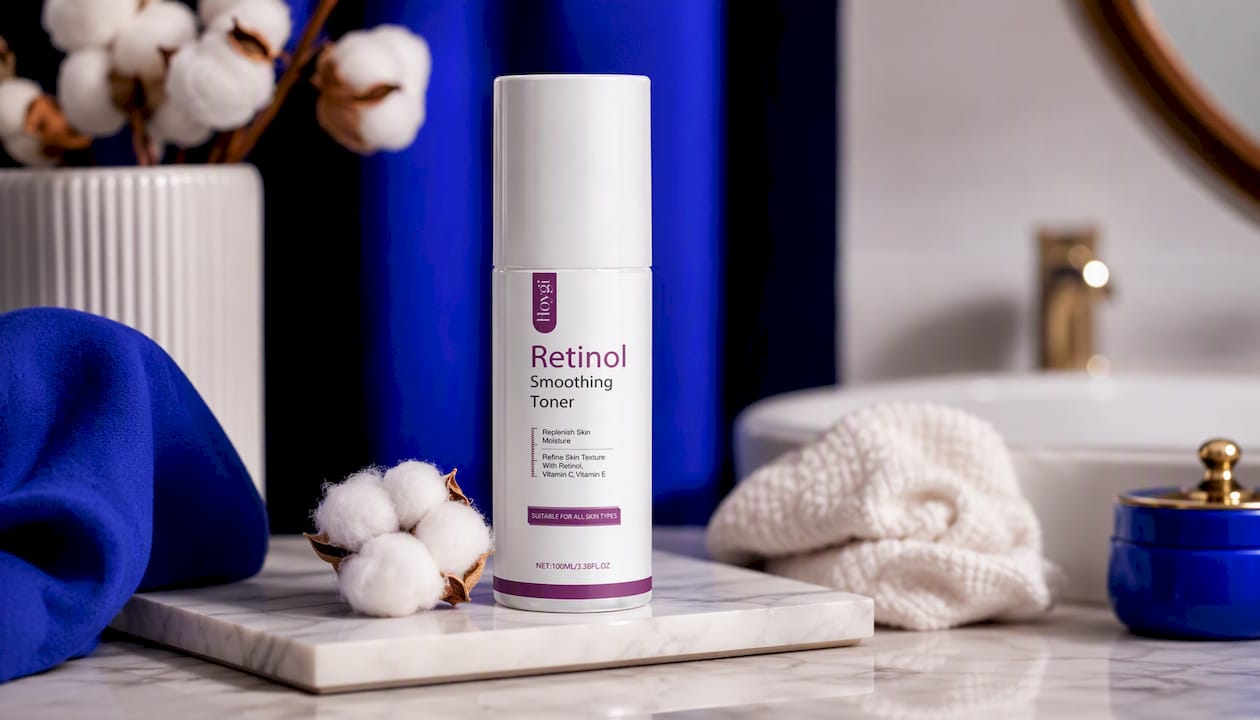
It combines retinol with a lighter, toner-based delivery instead of a heavy cream base, which makes it easier to control how much active you’re applying while you build tolerance. Start with two to three uses a week, follow it with a moisturizer, and never skip morning SPF. Work it into a full five-step routine once your skin adjusts, and patch test on your inner arm first if you’ve had irritation with retinol before. Head to the product page to check current availability and start your first ramp-up week.
Editorial Take: The Bakuchiol vs. Retinol Debate Misses the Real Question
Most coverage of bakuchiol versus retinol treats this like a rivalry with a winner, and that framing does readers a disservice. The 2018 trial that everyone cites, including this article, involved 44 people over 12 weeks. That’s a legitimate signal, not a verdict carved in stone. Treating it as proof that the two ingredients are interchangeable ignores how thin the bakuchiol research base still is compared to retinoids that have been studied for half a century.
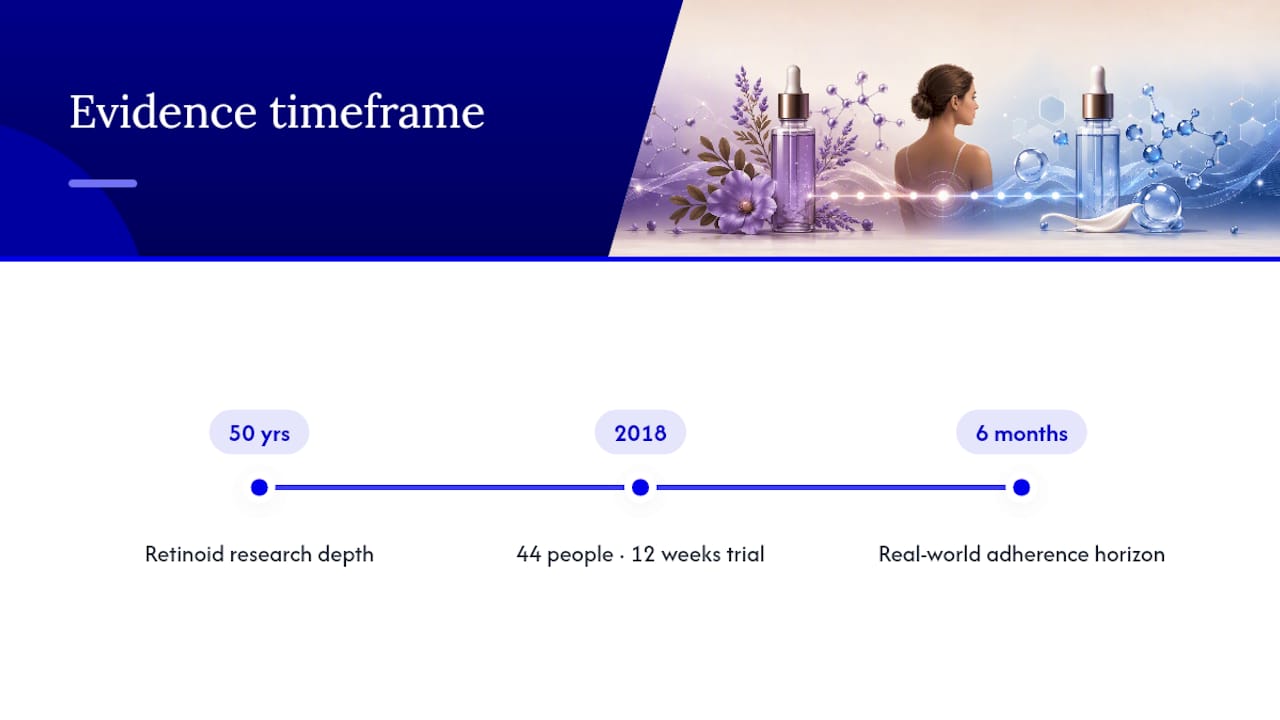
The more useful question isn’t which ingredient is “better.” It’s which one you’ll actually keep using in six months. A retinol that sits unused in a drawer because it made your face peel for a month delivers zero results. A bakuchiol you apply consistently every night, even if its ceiling might be marginally lower on paper, wins in practice. Consistency beats theoretical potency almost every time in skincare, and that’s the part ingredient debates tend to skip.
Where I’d push back on the conventional wisdom: don’t assume sensitive skin automatically means “retinol is off the table forever.” Plenty of reactive skin types build tolerance just fine with a slow enough ramp and the right supporting products. Bakuchiol is the easier on-ramp, not the only door in the building.
— Cyril
Sources
- PubMed: 2018 randomized double-blind bakuchiol vs retinol study
- Stanford Medicine: Does retinol deserve the hype?